09/11/2009 - 17:16h Lula no Financial Times

The real reward

By Lionel Barber and Jonathan Wheatley – Financial Times

Published: November 8 2009 18:14 | Last updated: November 8 2009 18:14

Luiz Ignacio Da Silva

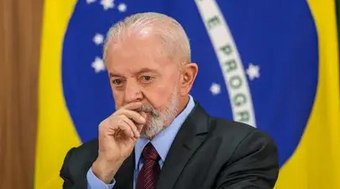
Luiz Inácio Lula da Silva is in full flow. Beaming broadly, favourite cheroot in hand, Brazil’s president recounts with gusto the day he said No to the International Monetary Fund. “I called [Rodrigo] de Rato [managing director] at the IMF and told him I didn’t want his money. He was really upset,” he laughs. “Rato said: ‘But lending to Brazil is really important to me.’”

For Mr Lula da Silva and his 190m countrymen, the memory of Brazil regularly going cap-in-hand to the IMF still rankles. Only a decade ago, in the wake of the Asian and Russian financial crises, Brazil was forced to devalue its own currency, the real, and seek emergency IMF loans. But now the tables have been turned.

“We were one of the last countries to go into the global crisis and we have been one of the first to come out,” says the 64-year-old former lathe operator who was first elected president in 2002.

For next year, his last in office, he is confident Brazil’s economy will grow by a more than healthy 5 per cent. “Not long ago I used to dream of accumulating $100bn in foreign reserves,” he says, still smiling broadly. “Soon we will have $300bn (€202bn, £180bn).”

During an hour-long interview in London, where he was accompanied by a dozen of the country’s senior ministers, bankers and business leaders, Mr Lula da Silva made his pitch for Brazil as a country transformed by an economic miracle. Inflation is under control, previously sky-high interest rates have fallen to real-world levels and revived capital markets are helping to fund investment. Income transfer programmes have brought millions of people into the consumer market. In the thick of the global crisis, the government kept sales moving with tax breaks on cars, household electrical goods and construction materials. Brazil was chosen a year ago to host the 2014 World Cup and, last month, the 2016 Olympic Games, leaving many feeling that, at last, their country’s time has come.

The question is whether Brazil’s recovery, which owes much to the boom in commodity prices, is sustainable. Many analysts worry that the flood of liquidity that is buoying Brazilian assets – the currency has gained about 36 per cent against the dollar this year and stocks are up 135 per cent in dollar terms – could just as easily retreat if the global crisis enters a second stage. Rising government spending on welfare and the public sector payroll, both hard to reverse, could also amount to a fiscal time bomb.

From poverty to presidency

Few presidents of big nations can have risen from such humble origins as Luiz Inácio Lula da Silva and certainly none in the history of Brazil. One of eight children born in poverty in Brazil’s north-east, he began work in a laundry aged 12 and was a shoeshine boy and office boy before becoming a metalworker, when his involvement with the trades union movement started.

His political career began as a leader of strikes against the industrial backers of Brazil’s 1970s military dictatorship. In 1980 he was founding president of the Workers’ party (PT). His experience as a union negotiator has made him a talented politician as well as the most popular president in Brazilian history.

Mr Lula da Silva points to his own personal story as evidence that his country has undergone an irreversible change. A poor migrant from the north-east, he began his political career in São Paulo as a trade union leader. After founding the Workers’ party (PT) it took three failed attempts over 12 years before he won the presidency. “That is enough for a candidate to mature. And I was the only one who couldn’t fail. I couldn’t do what [Lech] Walesa did in Poland [in a term so unimpressive that he failed to win re-election] or no worker would ever have been elected president again.”

Between being elected and taking office, Mr Lula da Silva wrote a “letter to the Brazilian people” assuring them his government would honour all contracts and eschew adventurism. The message was aimed equally at foreign investors – and it worked. Foreign capital, which had fled the country on fears that the leftwinger would go on a spending spree that would end in a debt default, returned.

The Lula administration also refused to break contracts or to undo any of the orthodox, inflation-busting policies inherited from Fernando Henrique Cardoso, his centrist predecessor. Some of the president’s leftwing supporters have challenged Mr Cardoso’s privatisations but the courts – which used to have a reputation for subjective waywardness – have consistently upheld the law. Other institutions have proved to be similarly robust, helping Brazil to earn a reputation for reliability on an often fickle continent.

Mr Lula da Silva does not mention Mr Cardoso by name, even though many credit him as the man who brought stability to Brazil’s tempestuous economy. He says his predecessors governed for the better-off 40 per cent of Brazilians, not the whole nation. Moreover, those who worried that his election in 2002 would herald a shift to leftwing populism simply did not understand him. “I was working obsessively under the conviction that I couldn’t make any mistakes.”

Another achievement has been dramatically to expand income transfer programmes that pay poor people – usually mothers – to keep their children in school and make sure they have medical check-ups. The Bolsa Família payments are small – from R$22 a month to a ceiling of R$200 per family – and cost less than 1 per cent of GDP. But they reach as many as 11m families.

As so often, Mr Lula da Silva uses a homespun anecdote to illustrate the broader argument about his country’s transformation. He recently met a woman in Brazil’s arid north-east who a year ago borrowed R$50 from a friend to make pasteis (fried snacks) for construction workers on one of the government’s flagship infrastructure projects. Since then she has built up a catering business big enough to pay R$5,000 ($2,900, £1,750, €1,960) in annual income tax.

Grasping the interviewer’s arm, the president declares with passion and pride that this woman is typical of the 30m Brazilians who have emerged from poverty and the 20m who have joined Brazil’s middle class over the past five years.

Mr Lula da Silva will never forget his roots and, as his second term draws towards a close, some critics detect signs that he may be reverting to his leftwing instincts. Plans for potentially enormous oil fields discovered off Brazil’s coast in 2007 include a new 100 per cent government-owned company to oversee production contracts. This would signal a much greater role for the state. Recent pressure on Vale, the mining giant privatised in 1997, to adjust its investment plans to suit government policy has also raised alarm in some quarters.

The president responds to such criticism with uncharacteristic defensiveness. “I doubt that at any time in Brazilian history the private sector has had more respect from the state than it has today, or that it has ever made more money. What I ask of Vale is that they turn iron ore into steel in Brazil and that they buy ships from Brazilian shipyards.”

The self-styled economic patriot is more at ease when asked about the state’s role in the economy. “The usual discussion about the role of the state has ended as a result of the global crisis. For a long time people said the state had failed and the markets could rule everything.

“I am against the state being the manager of the economy. The state has to be strong – but as a catalyst of development. And we have run sound fiscal and monetary policies. That is why the banking sector did not break down during the crisis.”

Mr Lula da Silva declared last year that the global financial crisis was the fault of blond, blue-eyed bankers in Wall Street and the City of London. When the FT suggests his nation escaped the worst of the crisis because Brazil is running a deficit of blond, blue-eyed boys, there is laughter among the entourage. But the president himself remains serious.

“I was reacting to comments by people who put the blame for the crisis on migrants,” he says. “Poor people in Africa and around the world are going to have to pay for the crisis and it wasn’t them who caused it. The rich countries say they can’t afford to fund poverty relief in poor countries. But to save their banks, they found trillions. If they had paid some of that in aid to poor countries, the world would be a better place.”

Brazil’s relations with the rest of the world under the Lula administration have shifted away from traditional trading partners and allies such as the US and the European Union in favour of diversifying trade and forging links with other parts of the world such as Asia, the Middle East and Africa. China has become its single biggest trading partner.

Mr Lula da Silva has pursued a “make friends with everybody” approach that includes reaching out to counterparts including Mahmoud Ahmadi-Nejad of Iran and Hugo Chávez of Venezuela, both bêtes noires in Washington. Critics say the Brazilian president’s foreign policy is naive, but he will have none of it.

“I think of when Nixon made China a preferential trading partner,” he says. “I believe in cohabitation with diversity. We don’t have the right to think other people should think like us. We have excellent relations with [centre-right] Colombia and Peru and with [leftwing] Venezuela and Bolivia. You can’t push people into corners.”

The president is also a fervent believer in the future of the Brics – Brazil, Russia, India and China – a concept thought up by Goldman Sachs, the investment bank. This has led to the countries’ four leaders holding regular summits, the next one billed for São Paulo next year. Yet many believe the interests of the Brics are too diverse, even conflicting, to form a meaningful group.

“It’s like when you meet a new girlfriend,” Mr Lula da Silva smiles. “If you only look at her defects you will get nowhere. But if you look on the bright side you might end up getting married.”

He also sees inspiration in the model of the EU, noting that only two generations ago France and Germany were at war. “That’s how we will build a strong alliance among the Brics. At our first meeting I suggested we should begin trading in our own currencies. We don’t need the dollar. It’s just cultural and it can change.”

With elections to take place next October, Mr Lula da Silva has avoided the temptation of seeking a third consecutive term, a move that would involve changing the constitution. Other Latin American leaders, notably in Colombia and Venezuela, are either considering or actively pushing for such changes to prolong their hold on power. But the president says it never occurred to him to become another caudillo.

“I was even afraid to run for a second term, remembering what happened to Fernando Henrique Cardoso [whose second period in office was much less successful than his first],” he says.

In fact, the president is already preparing to consolidate his political legacy through his chosen successor, Dilma Rousseff, his chief minister. Ms Rousseff, a tough technocrat, will struggle to emulate Mr Lula da Silva, partly because she lacks his trademark charisma and partly because she must hold together a broad coalition of often conflicting parties that is already showing signs of fraying. One or two possible candidates from his PT have fallen by the wayside, ensnared in corruption scandals. Another strong woman, Marina Silva, his former environment minister, has defected to the Greens.

“The coalition will hold together and we are making it stronger,” he says. “And we have a very good candidate…If I elect Dilma, my big contribution will be to allow her to create her own style.”

During the interview and in speeches in London the following day, the president and his colleagues refer repeatedly to the old joke that claimed Brazil was the country of the future and always would be. Now, they exude a new confidence. Brazil is not just the country of the present, the president says. “It is really living a magical moment.”

……………………………………

How a well insulated Bric became a hot property

After the dotcom bust, it was western housing markets that helped reflate the world economy. Some hope the Brics will do the rebuilding after the credit crunch, writes John Paul Rathbone.

For sceptics, this is a pipe dream. Yet in 2001, when the term was coined, Brazil, Russia, India and China made up barely one-sixth of the world economy. This year, according to the International Monetary Fund, they account for almost one-quarter, having together overtaken the US.

“Even I get excited about Brazil’s prospects,” says Sir Robert Wilson, the normally understated chairman of BG, the UK energy group. Brazil does not suffer from the ethnic and border conflicts of India, Russia’s loose regard for contracts or China’s supercharged credit- and investment-led growth. The domestic market is relatively insulated: exports account for 13 per cent of gross domestic product. Net debt is a manageable 30 per cent of GDP – less than half the UK level. With foreign currency reserves of $230bn (€155bn, £139bn), it is a net global creditor. Export markets are diversified, with China overtaking the US last year as Brazil’s biggest trading partner. No big bank has failed.

The Brics rising share

All this has fuelled investor enthusiasm. “Brazil is in fashion now, although it wasn’t always so,” says Emilio Botín, chairman of Spain’s Banco Santander .

In the 1980s and 1990s the country mostly funded itself externally, in dollars. When global investors grew nervous they sold the currency, debt service costs soared and the fiscal deficit exploded, compounding the problem. A debt crisis and devaluation followed. Now most of the country’s debt is domestically funded, reducing its risk premium and allowing funds to be raised more cheaply. With less needed for debt payments, more can be spent on investment – and consumption. The vicious cycle turned virtuous.

There are risks, of course. Brazil’s commodity wealth is a boon when mineral and food prices are high. But an abrupt Chinese slowdown could reverse that trend – and half the companies on the stock market have commodity exposure. Domestic industry could be hollowed out by an uncompetitive real strengthened by hot money inflows. Government spending is also rising. Although the fiscal deficit is small, the constitution makes it hard to cut entitlements and the public wage bill is a growing concern.

Enthusiasts are unperturbed. “We have full confidence in Brazilian economic growth,” says Mr Botín. The Santander chairman, whose bank has a large operation in the country, is a dealmaker rarely on the wrong side of a bet.

05/11/2009 - 10:29h Brasil: “Uma superpotência pronta para alimentar o mundo”

Toda Mídia – FOLHA SP


NELSON DE SÁ – nelsonsa@uol.com.br

Em progresso

ft.com
Em destaque, a comemoração pelos Jogos e as entrevistas com Lula e Coutinho

O “Financial Times” publica hoje e adiantou ontem em texto e PDF um caderno especial de dez páginas sobre investir no Brasil. Destaca longas entrevistas, inclusive vídeo, com Lula e o presidente do BNDES, Luciano Coutinho, cotado para ser o presidente do Banco Central. Ocupando metade da capa, um anúncio do Bradesco. Nas páginas internas, várias estatais, mais Andrade Gutierrez e Votorantim.
No enunciado da primeira página, “Louvor olímpico põe selo no progresso”. Na home page do caderno, “Superpotência pronta para alimentar o mundo”. Ao longo dos 36 textos, temas como o Bolsa Família que “faz diferença de verdade”; a aspiração de ser destino turístico global, mas também a violência no Rio; e o “forte crescimento depois de breve queda”.

Investing in Brazil

05 November 2009 – FINANCIAL TIMES

Ipanema

Inside this issue

• A superpower that is ready to feed the world

• The aspiration to become a world-class destination

• Much must be done to be ready in time for the Olympics – -

Content

Olympic accolade sets seal on progress

Jonathan Wheatley considers the strides that the South American giant has made and the pitfalls ahead

Banking: Quick recovery, enviable outlook

The sector has prospered thanks to wide spreads and tight regulation, explains John Rumsey

Capital markets: Strong growth after slight dip

It has been a good crisis but some are worried about the tax on inflows, reports Jonathan Wheatley

Celebrity status in the field of IPOs

A respected monetary policy and deep interest rate cuts have made the country an attractive option for emerging market equity investors, writes Samantha Pearson

Power generation: Amazon dam comes under close scrutiny

Ed Crooks looks at a hydro-electric project in a fragile region

Agriculture: Superpower is ready to feed the world

Huge strides have been made in productivity, with scope for more, writes Jonathan Wheatley

Metals and mining: Government intent on more control

The sector is facing pressure over policy decisions, writes Jonathan Wheatley

Sugar and ethanol: A perfect storm of troubles

Samantha Pearson on the predicament of an industry striving to transform itself

IT: Culture of hi-tech and hustle fosters world-leading ambitions

Brazil is rapidly becoming a new world centre for IT and BPO, writes Dom Phillips

Telecoms: A sweet spot for mobiles

In Brazil, more people have mobile phones than bank accounts, writes Dom Phillips

The north-east: Still trying to catch up

Santo Antônio: Project Financing

Business life in Rocinha favela

Irrigation helps the drylands bear fruit

Walmart cuts retailing cloth to suit fast-growing local customers

Retail: The battle for consumers heats up

Oil and gas: Sunken treasure is ticket to the world’s VIP energy club

Embraer: The worst may be over

Hotels: An Olympian effort may be required

Housing profile: Tenda sees benefit of home-building programme

Franchising: Golden opportunities, but choose your partners wisely

Shoemaking: A prized industry has travelled north-east

Education: Expanding economy discovers it lacks the skills it requires

Bolsa Família scheme: Income support makes a real difference

Housing programme: Support for affordable housing and construction sector

Environment: Masses of trees and soon to be a big oil producer

Infrastructure: Too little for too long, but PAC may put things on track

Aspiration: World-class destination

Coconut water takes on the world

Tourism profile: Brazilian Beach House exploits gap in villa rental market

Business of fashion: The sexy Brazilian touch goes down well in Russia

Olympics: Rio’s glossy sell belies a litany of troubles

The beautiful game: malfeasance and goalposts

Transport: Highway concessions

Interview with Luciano Coutinho, president of the development bank, the BNDES

21/10/2009 - 12:46h “O Brasil é a potência do século 21 a se observar”

http://1.bp.blogspot.com/_wLBSa6WSX-g/Sosr9IHXc0I/AAAAAAAAJc8/ULgBApqPP_8/s400/LulaBandeiraMarcelloCasal2.jpg

Brasil, ”a grande história”

Artigo no ‘Financial Times’ diz que o País é uma potência a ser observada


BBC Brasil, BRASÍLIA – O Estado SP

Um artigo publicado na edição de ontem do jornal Financial Times afirma que “o Brasil é a potência do século 21 a se observar”.

Assinado pelo comentarista Michael Skapinker, o artigo compara duas visões antagônicas do País – uma negativa, na qual se sobressaem problemas de violência e desigualdade social, e uma positiva, que ressalta uma economia pujante e plena de recursos naturais.

Sem tomar partido por uma das visões, o comentarista diz que o País será “a grande história do próximo ano”.

Os fundamentos de sua avaliação foram apresentados por ele em um recente encontro que reuniu jornalistas de diferentes publicações internacionais.

“O Brasil acabava de passar por uma crise financeira em boa forma. O País estava sentado em uma vasta descoberta de petróleo em alto-mar. Havia testemunhado a maior abertura de capital do mercado neste ano – os US$ 8 bilhões colocados em bolsa pelo braço brasileiro do Santander. Seria também a sede de dois dos maiores eventos esportivos do mundo: a Copa de 2014 e os Jogos Olímpicos de 2016.”

Para Skapinker, o outro lado da moeda seria a violência. “Não pude esconder certa palpitação em relação às desvantagens conhecidas do Brasil”, diz ele, citando relatos e notícias de furtos, assaltos à mão armada a sequestros.

“Não vi nada disso”, diz o comentarista, que recentemente fez sua primeira visita ao Brasil. “Mas, dois dias após minha saída do País, enfrentamentos armados entre gangues rivais no Rio custaram pelo menos 14 vidas, incluindo as de três policiais mortos quando o helicóptero em que estavam foi abatido.”

Para o comentarista, “é grande crédito do Brasil que, durante vários dias de encontros e entrevistas no Rio e em São Paulo, ninguém negou que o crime violento é uma realidade no País, e pode ter um sério impacto no seu desenvolvimento”.

Já pelo lado positivo, diz Skapinker, “o Brasil é um país com imenso potencial, um povo acolhedor e diverso, excelente comida e diversas empresas de porte mundial”.

“Diferentemente da China, o Brasil não tem conflitos étnicos agudos e é uma democracia partidária. Os brasileiros reclamam da corrupção de seus políticos, mas apontam que, ao contrário dos Estados Unidos, os resultados das eleições presidenciais – a próxima será em outubro de 2010 – são anunciados rapidamente.”

O comentarista acrescenta que a riqueza petroleira, em um país que produz a maior parte de sua energia de hidrelétricas e etanol, representa um “prospecto intrigante”.

“Os brasileiros sabem que o petróleo pode ser uma maldição ou uma bênção. A maneira como empregarem sua nova riqueza determinará se o País se tornará uma força no século 21.”

O comentarista encerra o artigo retomando sua ideia inicial. “O Brasil será uma grande história – não apenas no próximo ano, mas por muitos anos.”

09/09/2009 - 13:51h Financial Times entrevista Dilma Rousseff

Blog de Azenha

http://www.paulohenriqueamorim.com.br/wp-content/uploads/2009/08/dilma-sorriso.jpg

A entrevista de Dilma ao Financial Times (1)

Atualizado em 09 de setembro de 2009 às 09:17 | Publicado em 08 de setembro de 2009 às 22:58

Primeira parte de entrevista publicada na edição de 7 de setembro do diário britânico Financial Times:

Jonathan Wheatley: Primeiro, por que é este o melhor modelo para o Brasil e para o pré-sal?

Dilma Rousseff: Por que o que?

FT: Por que escolher esse modelo?

DR: Porque esse modelo é certo para a quantidade de petróleo que temos, para o pequeno risco exploratório e por causa dos altos níveis de retorno. Nós queremos manter uma parte maior dos lucros do petróleo.

FT: Vocês se inspiraram em outros modelos de outros lugares do mundo?

DR: Nós estudamos todos os modelos existentes. Cada país escolheu o modelo certo para sua própria história na indústria do petróleo e o que melhor se encaixa em suas necessidades. Somos um país com características próprias.

Desde o início de nossa história na indústria do petróleo havia uma grande interrogação sobre se tinhamos ou não petróleo. As pessoas diziam geralmente que não e que nossas condições geológicas significavam que não tínhamos petróleo. Por nossa conta e risco nós começamos a buscar petróleo em terra. E de fato foi um processo muito difícil. Nós fomos para a água e foi uma longa jornada, primeiro em águas rasas, depois em águas profundas, e agora em águas ultraprofundas.

Não tivemos transferência de tecnologia como outros países tiveram. Nós criamos as circunstâncias para chegar onde estamos, com o pré-sal. Ao produzir petróleo criamos uma grande companhia de petróleo com sua própria tecnologia. Ao mesmo tempo somos um país com uma base industrial diversificada e um grande mercado consumidor.

Agora temos uma oportunidade dupla. Podemos transformar a riqueza natural em riqueza social, para avançar a luta contra a pobreza. Nós acabaríamos com a pobreza no Brasil de qualquer forma, mas o pré-sal vai adiantar isso em anos porque teremos mais recursos para fazê-lo. Teremos educação de alta qualidade, vamos investir em ciência e tecnologia. E ao mesmo tempo temos a chance de criar um indústria de serviços e equipamentos para acrescentar valor ao nosso petróleo.

Assim, a grande pergunta é, o que deveríamos fazer para ficar com uma parte maior da renda do petróleo? Quando você tira petróleo do chão você cria riqueza, já que o custo de produção é muito menor que seu preço final. Quando você recupera os custos e dá um bom retorno ao capital investido, ainda sobra renda. A questão é quem deve ficar com essa renda extra. Escolhemos o modelo de produção compartilhada como forma de ficar com essa renda extra. Ao mesmo tempo temos claro os aspectos da geopolítica do petróleo.

FT: O que isso significa?

DR: O que isso significa? Que países produtores e países consumidores tem interesses distintos. E que hoje 77% das reservas estão nas mãos de companhias nacionais de petróleo, companhias estatais. É de nosso interesse garantir que quaisquer parcerias que o país fizer sejam de grande importância.

FT: Parcerias com?

DR: Com outros países, para fornecer petróleo. Para vender petróleo.

FT: Há algumas coisas que…

DR: Para suprir o mercado internacional de petróleo. Nós somos um país com instituições estáveis, com regras claras, que não rompe contratos, que estamos no Ocidente, e portanto somos um fornecedor de quem se pode depender. Eu não acredito que haja alguém que não queira uma relação conosco. Não estamos em uma área de turbulência, não temos conflitos étnicos e respeitamos contratos. Então, penso que somos extremamente atrativos.

FT: Qual será o papel de outras companhias na indústria de petróleo?

DR: Elas terão um papel importante. Por que? Porque essa é uma parceria que é de interesse para nós, mas é de nosso interesse em nossos termos. Não temos razão para acreditar que toda a renda tem de ser transferida para companhias internacionais de petróleo ou companhias nacionais de petróleo de outros países para atraí-las ao Brasil.

Sabemos que as companhias internacionais de petróleo sabem que as regras do jogo podem mudar quando se passa a uma situação de baixo risco exploratório e de grande lucratividade. Considere os dois grandes blocos que encontramos, Tupi e Iara. Em Tupi temos entre 5 bilhões e 8 bilhões de barris; em Iara temos entre 2 e 4 bilhões de barris. Então eu te pergunto, por que não seria atrativo para as companhias internacionais de petróleo participar no processo do pré-sal se a questão estratégica de acesso às reservas é garantida por nós? Se você tiver 10 por cento de um bloco de 8 bilhões de barris você tem 800 milhões de barris. Quando você considera que um bloco é considerado grande de 500 a 600 milhões de barris, não vejo qual é o problema.

FT: Uma problema que me foi apresentado é de que as companhias estrangeiras não serão operadoras, elas serão convidadas para ser pouco mais que investidoras de capital.

DR: Não. Não. Elas serão convidadas a participar nos blocos de operação. Hoje, por exemplo, no pré-sal, por que uma companhia internacional de petróleo quer ser parceira da Petrobras?

FT: Para participar do risco e da recompensa?

DR: Não. Não. Porque elas ganham com a transferência de tecnologia da Petrobras. Qual é a diferença entre a Petrobras e qualquer outra grande companhia internacional de petróleo? A Petrobras faz 22% por cento da exploração em águas profundas do mundo. As outras duas companhias privadas mais próximas tem 14% cada. Assim, a Petrobras está no mesmo nível das grandes companhias internacionais de petróleo em termos de conhecimento das águas profundas. Mas aqui no Brasil qual é o grande diferencial? Você sabe qual é?

FT: Qual?

DR: Que a Petrobras conhece os campos sedimentários brasileiros em águas profundas. Já os conhece. E esse conhecimento, você sabe o que produz? Reduz riscos. Se você reduz o risco, você sabe o que isso produz? Alta rentabilidade. Por que argumentamos que a Petrobras deve ser a operadora? Porque ser a operadora significa ter acesso a tecnologia, ditar o ritmo de produção e, ao mesmo tempo, a adoção da tecnologia específica mais apropriada àquela área.

Não vemos qualquer obstáculo a que as companhias internacionais de petróleo participem conosco. Elas terão um papel ativo nos comitês operacionais, op com. Por que elas terão um papel fundamental? Porque… como trabalha o comitê operacional? Todo mundo se senta, certo? E discute o melhor… o operador vai, apresenta seu projeto operacional. E os outros, que tem conhecimento, sem qualquer dúvida, eles discutem se deveria ser desse jeito ou daquele. A Petrobras obviamente vai usar empresas de serviços como qualquer outra companhia internacional.  As companhias tradicionais de serviços, como a Halliburton e outras.

FT: Um comentário que ouvi é de que no Golfo do México, nos Estados Unidos, há mais de 100 companhias operando e que elas se entenderam enquanto faziam. Elas desenvolveram tecnologia em parcerias, atuando, e há uma preocupação de que desde que essas companhias serão minoritárias em qualquer comitê de operação [no pré-sal] vão se dispor menos a trocar tecnologia.

DR: Posso dizer algo? Eu não penso que as tecnologias existentes e disponíveis são segredos tecnológicos. O que faz a diferença entre uma companhia e outra é o conhecimento que ela tem daquele campo, daquela região. Não temos exatamente uma companhia de baixa tecnologia na Petrobras. Se fosse assim não haveria explicação para o número de premios que a Petrobras ganhou da OTC (Conferência de Tecnologia Offshore); na verdade fui a um OTC em Houston para receber um deles, como presidente do conselho.

Assim, não acredito que haja qualquer questão sobre se a Petrobras será excluída de acesso a tecnologia. É muito pouco provável, se você é uma companhia que tem um campo e o que está em jogo é a renda de 600 milhões de barris, que você não vá investir nas melhores práticas. É pouco provável, ninguém dá tiro no próprio pé nessa área, ninguem. De outro parte, estou certa de que nessas parcerias, hoje, as pessoas estão minimizando o papel que todas essas companhias internacionais de serviços jogam. Elas estão sendo subestimadas. Porque nenhuma dessas companhias de petróleo opera sem elas, não que eu saiba.

FT: Ok. Outra dúvida que as pessoas tem é sobre a capacidade de investimento da Petrobras. De onde virá o dinheiro? E gostaria de entender essa questão do…

DR: De onde vem o dinheiro de uma companhia internacional de petróleo? O que você pensa?

FT: Dos acionistas, dos lucros…

DR: Uh uh, na na na. Do tamanho de suas reservas. Se você é um banco, a quem empresta? A uma que tenha reservas. Por que você acha que as pessoas emprestam à Petrobras? Hoje. Por que você acha que nós, no meio de uma crise, temos acesso a dinheiro? Esse argumento não tem base. A idéia de que as companhias de petróleo não vão investir… não acredito nisso por um minuto. Você acredita?

FT: Bem, não tenho opinião, mas pessoas expressaram dúvidas.

DR: Estou te perguntando se é plausível. É o que estou perguntando. A Petrobras terá acesso a financiamentos? Penso que sim. E acho que as companhias internacionais de petróleo vão participar desse investimento.

FT: Explique como a capitalização da Petrobras vai funcionar. São 5 bilhões de barris…

DR: Deixe-me voltar à questão do financiamento. Não estamos tirando as companhias internacionais de petróleo do investimento. É por isso que perguntei a você se é plausível. Estamos dizendo, olhe, venha e participe conosco porque você terá acesso a reservas enormes. A Petrobras será a operadora, o que reduz o risco por causa do conhecimento dela sobre os campos, e você terá um retorno adequado porque as reservas são grandes e você, a companhia internacional de petróleo, será capaz de colocar em seu balanço essas reservas às quais ganhará acesso nos leilões.

Vamos supor que a companhia obtém 600 milhões de barris, poderá registrá-los e será capaz de se financiar da mesma forma que a Petrobras. Então não acreditamos que o financiamento virá só da Petrobras, nem só das companhias internacionais de petróleo, nem só dos bancos. Virá da melhor combinação possível entre os três. É por isso que digo que não acredito ser plausível supor que se o arranjo é dessa forma ou daquela outra, isso vá reduzir o acesso ao capital. O que garante o acesso ao capital para uma companhia de petróleo e permite que ela se financie é precisamente a quantia de reservas de que dispõe.

FT: Mas a dúvida é…

DR: É um círculo virtuoso.

FT: Mas a dúvida é sobre de onde vem o capital que colocará esses poços em produção. Por exemplo, Tupi tem de 5 a 8 bilhões de barris. Se o custo de extração é de 10 dólares por barril, estamos falando de algo entre 50 e 80 bilhões de dólares, o que é um monte de dinheiro.

DR: Para um período de 35 anos. Ninguem tira tudo aquilo em um ano.

FT: Não, com certeza, mas…

DR: Seria fisicamente impossível. Deixa eu explicar.

FT: Mas há uma companhia [a Petrobras] que fica com de 30% a 100% de todo bloco…

DR: Deixa eu explicar. Tupi e Iara já estão sob concessão. Ok? Para a Petrobras, Tupi e Iara estão sob concessão. Assim, não fazem parte desse novo modelo regulatório.

FT: Sim…

DR: Na sua parte de Tupi e Iara, a Petrobras está investindo 174 bilhões de dólares até 2013. Certo?

FT: Não, é o total para tudo….

DR: São 174 bilhões de dólares sem contar o pré-sal. Isso é antes do pré-sal. Você sabe quanto a Petrobras levantou durante esse ano de crise? Foram 31 bilhões de dólares. Você sabe como levantou 31 bilhões de dólares? Vendeu petróleo adiantado à China [U$ 10 bilhões]. Ok? Nós colocamos 12,5 bilhões de dólares; 12,5 bilhões. O resto [a Petrobras] levantou no mercado. Levantou 31 bilhões de dólares. Ninguem no mundo levantou 31 bilhões de dólares. Entre fundos próprios, vendas adiantadas e acesso ao financiamento — e não estou falando do pré-sal, que é um processo que vai levar décadas, isso é o pré-pré-sal.

FT: Mas o pré-sal em si vai requerer centenas de bilhões.

DR: Vai. Parte disso, vamos capitalizar. Estamos dando à Petrobras 5 bilhões de barris. Dos 5 bilhões de barris que a Petrobras terá, parte será de sua própria renda. Outra parte, vai mostrar a qualquer banco internacional que tem 5 bilhões de barris extras para dar de garantia. E [a Petrobras] tem um bom acesso às reservas do Brasil. O rating da Petrobras será bom.

FT: E…

DR: E te digo mais. Não há país no mundo com o qual conversamos recentemente onde… a grande pergunta é, como eu participo do pré-sal?

FT: Estive lendo a lei que você mandou para o Congresso e há um parágrafo dizendo que a União, através de um fundo criado por lei, pode participar em investimentos e atividades de produção. Que fundo é esse e como vai funcionar?

DR: Você tem familiaridade com o mecanismo norueguês?

FT: Sim.

DR: Quando eles ainda tinham grandes reservas, a Statoil era obrigada a ficar com 50%. Em alguns casos a União pôs dinheiro, em outros não. Em nosso modelo, em princípio, não adiantamos qualquer dinheiro. Mas, caso a caso, se decidirmos participar, poderemos. É assim que funciona. Deixe-me explicar o fundo. Todo o dinheiro que extrairmos do pré-sal irá para um fundo. Esse fundo vai gastar sua renda em várias atividades. Lutar contra a pobreza, investir em educação, ciência e tecnologia. Mas ao mesmo tempo também vai investir.

FT: Então é o mesmo fundo.

DR: Esse mesmo fundo precisa criar renda, tem que fazer seu dinheiro funcionar. Então pode investir em ações, em vários bônus internacionais, você pode fazer investimentos diretos. E quando esse fundo atingir um grande volume, pode ser que o investimento mais atrativo no Brasil seja no setor do petróleo. Por que não? Assim, em princípio, a União não coloca qualquer dinheiro, mas no futuro, se quiser, poderá.

http://thenea.files.wordpress.com/2008/09/financial-times-newspaper-balloon1.jpg

Full text: Dilma Rousseff interview

Published: September 7 2009 18:15 | Last updated: September 7 2009 22:13

Jonathan Wheatley, the FT’s Brazil correspondent, interviewed Dilma Rousseff, chief minister to President Luiz Inácio Lula da Silva of Brazil on September 2. Ms Rousseff is a former mines and energy minister and remains chairman of the board of Petrobras, the government-owned but publicly-traded oil company. She is one of the architects of the government’s proposed new regulatory regime for the oil industry that will govern operations in the pre-salt fields, Brazil’s potentially enormous off-shore oil deposits discovered over the past two years.

FT: First, why is this the best model for Brazil and the pre-salt?

DR: Why what?

FT: Why choose this model?

DR: Because this model is right for the amount of oil we have, for the low level of exploratory risk, and because of the high levels of returns. We want to keep a bigger part of the oil revenues.

FT: Were you inspired by other models around the world?

DR: We studied all the models in existence. Each country has chosen the model that is right for its own history in the oil industry and best suits its needs. We are a country with characteristics very much our own. From the beginning of our history in the oil industry there was a big question mark over whether we had any oil. People often said we didn’t have any and that our [geological] conditions meant that we couldn’t have. At our own cost and risk we began to look for oil on land. And indeed it was a very difficult process. We moved off land and underwent a long journey, to shallow water, then to deep water, and now to ultra deep water.

There was no transfer of technology in the way that other countries have had. We created the circumstances for us to get to where we are now, with the pre-salt. By producing oil we created a great oil company with its own technology. At the same time we are a country with a diversified industrial base and a large consumer market.

Now we have a double opportunity. We can transform natural wealth into social wealth, to advance the fight against poverty. We were going to end poverty in Brazil anyway, but the pre-salt will bring that forward by years because we will have more resources to do it. We will have high quality education, we will invest in science and technology. And at the same time we have the chance to create a supplies and services industry and add value to our oil.

So the big question is, what should we do to appropriate a greater share of the oil revenues? When you bring oil out of the ground you create revenues, because the cost of producing oil is much less than its final price. So once you have recovered the costs, and delivered an adequate return on the capital invested, there are still revenues left over. The question is who should have this extra. We chose the shared production model as a way of appropriating this extra revenue. At the same time we are very clear about the geopolitical aspects of oil.

FT: What does that mean?

DR: What does that mean? That producing countries and consuming countries have different interests. And that today 77 per cent of reserves are in the hands of national oil companies, state oil companies. It is in our interest to ensure that whatever partnerships the country might enter into are of great importance.

FT: Partnerships with?

DR: With other countries, to supply oil. To sell oil.

FT: There are some things that…

DR: To supply the international oil market. We are a country with stable institutions, with clear rules, that doesn’t break contracts, that is in the west, and is therefore a reliable supplier. I don’t believe that anybody won’t want to have a relationship with us. We are not in an area of turbulence, we don’t have ethnic conflicts, we don’t have religious conflicts and we respect contracts. So we think we are extremely attractive.

FT: What will be the role of other companies in the oil industry?

DR: They will have an important role. Why? Because this is a partnership that is of interest to us, but it is of interest to us on our terms. We have no reason to think that the revenue has to be entirely transferred to international oil companies or to national oil companies in other countries in order to attract them to Brazil. We know that international oil companies know the rules of the game change when you move to a situation with low exploratory risk and high profitability. Take the two biggest blocks we have found, Tupi and Iara. In Tupi we have between 5bn barrels and 8bn barrels; in Iara we have between 2bn barrels and 4bn barrels. So, I ask you, why would it not be attractive for an international oil company to take part in the pre-salt process if the strategic question of access to the reserves is guaranteed by us? If you have 10 per cent of a block of 8bn barrels you have 800m barrels. When you consider that a block is considered large from 500m to 600m barrels, I don’t see what the problem is.

FT: One problem that has been put to me is that foreign operating companies won’t actually be operators, they are going to be invited to be little more than capital investors.

DR: No. No. They will be invited to take part in the operating blocks. Today, for example, in the pre-salt, why would an international oil company want to be a partner with Petrobras?

FT: To participate in the risk and reward?

DR: No. No. Because they gain from technology transfer from Petrobras. What is the difference between Petrobras and any other big international oil company? Petrobras does 22 per cent of the world’s exploration in deep waters. The other two nearest who are private international companies have 14 per cent [each]. So Petrobras is on a level with big international oil companies in terms of knowledge of deep waters. But here in Brazil what is its big differential? Do you know what it is?

FT: What?

DR: That it knows the Brazilian sedimentary fields in deep waters. It knows them. And this knowledge, do you know what it produces? Reduced risk. If you reduce the risk, do you know what you produce? Higher profitability. Why do we argue that Petrobras should be the operator? Because being the operator means having access to technology, setting the rate of production, and at the same time, adopting the specific technology most appropriate for that area. We don’t see any obstacle to the international oil companies that will participate with us. They will have an active role in the operational committee, the op com. Why will they have this fundamental role? Because, how does the operational committee work? Everyone sits down – right? – and discusses the best… the operator goes in and presents its operational project. And the others, who have knowledge, without a doubt, they discuss if it should be like this or like that. Petrobras obviously will contract service companies like any other international company. The traditional service companies, like Halliburton and the others.

FT: One comment I’ve heard is that in the US Gulf of Mexico there are more than 100 companies operating and they have worked out how best to operate while actually doing it. They develop technology in partnerships on the job, and there is a concern that since these companies will be minorities in any operating committee that they will be less willing to share technology.

DR: Can I say something? I don’t think that the technologies in existence and available are technological secrets. What makes the difference between one company and another is the knowledge that it has over that field, that region. We don’t exactly have a low technology company in Petrobras. If it was like that there would be no explanation for the number of prizes that Petrobras has won from the OTC [Offshore Technology Conference], in fact I went to an OTC in Houston to receive one of them, as chairman of the board. So I don’t believe there’s any question of Petrobras being excluded from access to technology. It’s very unlikely, if you are a company that has a field and what is at stake is the income from 600m barrels, that you won’t invest in the best practices. It’s very unlikely, nobody shoots themselves in the foot in this area, nobody. On the other hand I’m sure that in these partnerships, today, people are minimising the role that all these international oil service companies play. They are underestimating it. Because none of these companies operate without them, not that I know of.

FT: OK. Another doubt that people have is over the capacity of Petrobras to invest. Where will the money come from? And I’d like to understand this question of…

DR: Where does the money come from for any international oil company? Where do you think?

FT: From its shareholders, its profits…

DR: Uh uh, na na na. From the size of its reserves. If you are a bank, which company do you lend to? The one with the reserves. What do you think is the reason people lend to Petrobras? Today. Why do you think that we, in the middle of the crisis, have had access to money? That argument has no basis. The idea that oil companies won’t invest… I don’t believe that for a minute. Do you believe it?

FT: Well, I don’t have any opinion, but people have expressed doubts.

DR: But I’m asking you if it’s plausible. That’s what I’m asking. Will Petrobras have access to finance? I think it will. And I think the international oil companies will take part in the investment.

FT: Explain to me how the capitalisation of Petrobras will work. It’s 5bn barrels…

DR: Let me go back to the question of funding. We’re not taking the international oil companies out of the investment. That’s why I asked you if it’s plausible. We’re saying look, come and participate with us because you will have access to enormous reserves. Petrobras will be the operator, which reduces the risk because of its knowledge of the fields, and you will get an adequate return because the reserves are large and you, the international oil company, will be able to put onto your books those reserves you gain access to in the auction. Let’s suppose the company gets 600m barrels, it will be able to register them and it will be able to leverage itself in the same way Petrobras will. So we don’t think the funding will come only from Petrobras, nor only from the international oil companies, nor only from the banks. It will come from the best possible combination between them. That’s why I say I don’t believe that it’s plausible to suppose that if the arrangement is this one or that one it reduces the amount of access to capital. What guarantees access to capital for an oil company and allows it to finance itself is precisely the amount of reserves that it has.

FT: But the doubt is…

DR: So it’s a virtuous circle.

FT: But the doubt is over where the capital comes from to bring these wells into production. For example, Tupi has 5bn to 8bn barrels. If the cost of extraction is $10 per barrel, that’s $50bn to $80bn in one field, which is a lot of money.

DR: Over a period of 35 years. Nobody takes all this out in a year.

FT: No indeed, but there is….

DR: That would be physically impossible. Let me explain.

FT: But there is one company taking between 30 per cent and 100 per cent of every block…

DR: Let me explain. Tupi and Iara are already under concession. OK? To Petrobras, Tupi and Iara are under concession. So they are not part of this new regulatory model.

FT: Yes…

DR: In its part of Tupi and Iara, Petrobras is investing $174bn up to 2013. Right?

FT: No, that’s the total in everything…

DR: $174bn, without the pre-salt. This is before the pre-salt. Do you know how much Petrobras raised during this year of crisis? $31bn.

Do you know how it raised $31bn? It sold 10bn in advance to China. OK? $12.5bn we put in. $12.5bn. The rest, it raised in the market. It raised $31bn. Nobody else in the world raised $31bn. Between internal funds, advance sales and access to finance, and I’m not talking about the pre-salt, which is a process that will take decades, this is pre-pre-salt.

FT: But the pre-salt itself will require hundreds of billions.

DR: It will. Part of it, we are capitalising. We are giving Petrobras 5bn barrels. Of the 5bn barrels Petrobras will have, part of this will be its own income. Another part, it will show any international bank that it has 5bn barrels extra as guarantee. And it has good access to Brazil’s reserves. Its rating will be good.

FT: And…

DR: And I’ll tell you something else. There is no country in the world that we have talked to recently where…. the big question is, how can I take part in the pre-salt?

FT: I’ve been reading the bill you sent to Congress and there’s this paragraph saying the Union [the Republic of Brazil] through a fund created by law may take part in the investments and activities of production. What fund is this and how will it work?

DR: Are you familiar with the Norwegian mechanism?

FT: Yes

DR: When they still had a lot of reserves, Statoil was obliged to take 50 per cent. In some cases the Union put in money and in some cases they didn’t. In our model, in principle, we won’t advance any money. But in case, in case, we decide to take part, we can do so. That’s what this is about. So let me explain the fund. All the money that we extract from the pre-salt will go to a fund. This fund will spend its income on various activities. Fighting poverty, education, science and technology. But at the same time it will invest.

FT: So it’s the same fund.

DR: This same fund has to create income, it has to make its money work. So you can invest in shares, in various international bonds, you can make direct investments. And when this fund has reached a large volume, it could be that the most attractive investment available in Brazil is in the oil sector. Why not? So in principle the Union doesn’t put in any money but if in the future it wants to put money in, it can.

FT: And it puts in via Petro-Sal, via Petrobras?

DR: No, it puts it in directly, it’s the fund that invests, in the consortia. Let’s suppose the Union takes a 60 per cent share in a consortium. It puts its money in. The fund joins the consortium.

FT: There’s another doubt about this comparison with the Norwegian model, where…

DR: No, it’s different.

FT: No, exactly, it’s different. In Norway there is a very strong separation between the government, the regulator and StatoilHydro. Here the government is capitalising Petrobras and it can come in as an investor, so it’s coming in on both sides…

DR: I’m sorry but I don’t think this is the difference. In Norway, they don’t do auctions. There, the criteria for choice of partnerships are more subjective. Who makes the choice is the ministry, it’s not a manner, let’s say, in which there is no subjectivity. Because for us, the winner is the one that offers the biggest share [of oil to the government]. In Norway, no. There’s no tendering and no auction. This is a substantial difference.

The second substantial difference is that in Norway, the reserves are in decline, so they can’t be compared with us because we are in the phase of rising reserves. The North Sea can no longer be compared with the pre-salt. But in Norway, Statoil used to be guaranteed 50 per cent. We are giving 30 per cent [to Petrobras] of the investment and less [than that] of the profit. In Norway Statoil had 50 per cent of the investment. There are various other differences I could list.

FT: And what is happening with the ANP [Brazil’s independent oil industry regulator]?

DR: The ANP has a central role.

FT: But there are some functions that the new law gives to the CNPE [the national council on energy policy, a government body] that used to be the ANP’s. The choice of the blocks…

DR: No, no. We never gave that to the ANP. For example when the pre-salt was taken out of the last auction round, it was done by the CNPE.

FT: The management of the auctions…

DR: No. Look. What is the role of the ANP? Who does the auctions? The ANP. The auction process is handled by the ANP and the ANP does the contracts. The contracts are signed by the ministry of mines and energy, because they are signed in name of the Union. How does this model work? It’s a system of checks and balances. Petro-Sal, which represents the Union in the management of the blocks, enters the consortium in the name of the Union to oversee the cost of the oil and investment decisions. Because the cost of the oil is a strategic variable. Right?

FT: Right.

DR: And inside the consortium, in the operating committee, an operating plan is approved. Then the ANP has to approve this plan just as it approved them before. The ANP looks at Petro-Sal like any other agent. So there are checks and balances because Petro-Sal does one thing, but the ANP above it is the regulator. OK? So, it’s a very good question because it could seem that we were doing away with the role of the ANP, but it’s the contrary.

On the other hand, the rate of production isn’t decided by the ANP. The ANP doesn’t make policy. It regulates. The interests of the Union are defined by the CNPE which is an organ linked to the Presidency of the Republic. And it defines at what rate we will produce oil and the amount of local content that we want in the supply of goods and services. And that isn’t a role for the ANP because it’s a political role.

FT: Understood. Now, explain the capitalisation of Petrobras, which is something I don’t understand. Petrobras will be able to sell these exploration rights at a certain price, and the higher the price, the more money the government puts into Petrobras, correct? And what happens to the minority shareholders? If the price is high, they have to pay a higher price as shareholders and also pay to take part in the capitalisation or else be diluted?

DR: Let me explain. There are various separate stages. That’s why it’s a good question. First, we authorise the transfer of 5bn barrels of oil equivalent to Petrobras, and to do this transfer we will do a contract under which Petrobras will pay us for the 5bn, OK? And we will use this money to capitalise Petrobras, OK? There are two parallel operations.

I’ll explain how. What will we do? We will contract an independent evaluator to set the price per barrel. That price will have to be certified by the ANP. Then, Petrobras and the government will have up to 24 months – the first evaluation is a simpler one – Petrobras and the government will have 24 months to contract out a definitive valuation.

FT: OK…

DR: If the definitive evaluation is bigger than the first one, Petrobras will pay the Union. If it’s smaller, the Union will pay Petrobras. We know that the price of oil under the ground is one thing, and the price of oil above ground is another. Why will there be these two stages? Because we will discount here, at the second stage, the operating costs.

In any event, when you increase the company’s capital, minority shareholders have the right, because Petrobras is a public company, to exercise their option in full or in part in proportion to their shareholding. This is company law anywhere in the world. At every increase in capital, the minority shareholders have to be called to take part. Either they pay more or they are diluted. This is under any hypothesis, whether its done with oil or money or government bonds.

FT: So Petrobras and the government will decide together…

DR: No, no, we will contract out an independent evaluation and the ANP will certify the contract. When the ANP certifies it, the operation with Petrobras is completed. Petrobras takes government bonds, or money, it can pay any way it likes and we, once we have received this, will deliver it back to Petrobras.

FT: So the minority shareholders…

DR: They will have to be called, that’s an obligation, or you would be damaging their rights.

FT: And the higher the price, the more the minorities will be called on to pay…

DR: That’s life, isn’t it? The more money we put in, the more the minorities will be asked to contribute. And the less we put in, the less they will be invited to contribute.

FT: What is the logic of the Union capitalising Petrobras as an operator, to increase its ability to operate, instead of having the new fund put money in so that the cost of operation is less?

DR: Good question. First, the fund doesn’t have any money.

FT: But the government does…

DR: In the future. Second, Petro-Sal idem, it doesn’t have any money. The government has, but it hasn’t got so much money that it can go out capitalising Petrobras in that way. As it is highly advantageous for Petrobras to be paid in barrels, it’s much better for the government to capitalise it in barrels. There’s no disadvantage to Petrobras.

FT: But the question is about the relation between a company that is basically government-owned but has most of its capital in the hands of minorities…

DR: Of course, if it was a private company, if we were putting 5bn barrels into the hands of a private company, it would like that a lot. So we are neither damaging the rights of Petrobras nor of the minorities.

FT: But I want to understand the logic. The government will put in money to reduce the cost of production and it could put it in via Petro-Sal to reduce the cost for all operators, Petrobras and the rest.

DR: But we don’t have any money at all in Petro-Sal. We don’t want to transform Petro-Sal into an operating company.

FT: OK, but I mean either via the fund or directly, since you’re putting public money into Petrobras…

DR: But why would we put in public money?

FT: To lower the cost of production and get more oil flowing more quickly.

DR: Only if we gave subsidised money. What for? Why would we take Brazilian money and give subsidised funding to Petrobras or any other oil company, Brazilian or not?

FT: In the way you described that the fund can come in as an investor.

DR: Be we won’t be subsidising anything.

FT: No, I don’t mean as a subsidy, I mean as a way of reducing the overall cost for the operators.

DR: But look, this will happen at different stages. In the first stage, there is no money in the fund. And we won’t give any money to Petrobras. We will give it funding the form of barrels of oil. Petrobras can convert this into money. We can’t but Petrobras can, it’s an oil company. And I’ll tell you, I think this is very creative. I’m taking wealth that exists, that everybody knows is there, I’m taking this wealth and capitalising Petrobras. I’m doing a contract to transfer rights to Petrobras. And Petrobras has to pay me. At what price will it pay me? At a price related to the profit from the production of these 5bn barrels. I’ll hire an evaluation and I’ll say, look, the price per barrel down there under the sea is one thing, I’ll pay a certain amount, let’s say it’s 1. So I’m paying you 1. Then this price is certified. At the current stage of our knowledge, it’s 1. This will help Petrobras to raise finance, improve its international standing, its balance sheet will get better, when the banks look at it’s accounts they’ll say, ah, they’re much better. Fine. Based on this I drill several wells, one here, one there, one over there, and I say, ah, I have 5bn barrels here. My seismic says this, my exploration study says this, I have all this knowledge about this field, and this value isn’t 1. It’s 12. OK? So my contract, with this clause about the adjustment, goes to 12. So it’s not 5bn, its 5bn times this and Petrobras owes me X. It does a capital call and pays me with shares. I call the minority shareholders and they put in money. Great for me, because money has come in, it’s primary income, excellent. If the minorities don’t come in I have shares in Petrobras that are worth X amount on the international market. If the minority shareholders don’t come in of course their share will be diluted. It’s like that anywhere in the world.

Now, there’s one thing that I didn’t answer. Why don’t we do it with money? Because, as I was saying, at stage one in the capitalisation process: investments are always made in advance. It takes years before you arrive at the point of bringing up oil. So at the beginning we don’t have money in the fund, we don’t have any resources from the pre-salt. Nothing. What do we have? We have the reserves that Brazil has accumulated. But it makes no sense for the government to do this now if it can hand over 5bn barrels and with that put Petrobras in a better situation, ensure that it can raise funding on international markets, given that it has this access.

FT: So who will pay for the first years of investment?

DR: We will. With the 5bn barrels of oil.

FT: But who will lend the money?

DR: Today, if you look at this year, coming out of the crisis, there are $12.5bn that we guaranteed. $10bn from the contract with China, in which we supply oil and China advances the money. So that’s $22.5bn. So to get to $31 leaves $8.5, OK? And we got that on the international market. So there are various ways to capitalise Petrobras. Without a shadow of a doubt, Petrobras will become because of the pre-salt, a large and interesting player to do partnerships with, to do investments and loans. With the return to economic growth in the developed countries and the performance of the emerging countries we are certain that Petrobras will offer extremely attractive greenfield investments. We have no doubt of that, from the traditional international financiers, the banks, especially if their situation improves, and form other international partners that will appear. But we are certain of one thing. This stress test that the Brazilian government and Petrobras have gone through, which is that after the fall of Lehman Brothers and the absolute closure of international credit lines, we survived. So if we have survived the worst scenario of recent times I don’t have the slightest doubt that Petrobras will have every possibility of raising finance on international markets. If you look at the performance of the oil industry, only Petrobras and one other company reported profits.

FT: When will the next auction round for new blocks take place?

DR: We have to wait for this [the new regulatory framework] to be approved in Congress. Minister Lobão [mines and energy] said in a press conference that he was looking at the possibility of doing a round of concessions this year. Concessions, not production sharing, not the pre-salt. For the pre-salt we have to wait for the regulatory framework. That’s why the government is using the urgency system in Congress [which gives it 90 days to approve or reject the bills]. Now, we are confident that Congress will evaluate this quickly so that we can beginning work on the pre-salt.

FT: What will be the impact of all this on the elections next year?

DR: It’s like this. In Brazil we have a difficult situation, and I’m glad you asked the question. Life is difficult, we have a cycle of four years at the federal and state government level, and a separate four-year cycle for the municipal governments that gives us elections every two years. So you’ve either just been elected, or you’re in the municipal cycle, or you’re in the intermediate year or you’re in election year again. So it’s not possible to imagine that things can only be done in Brazil in years with no election, or else there would be very little time to get anything done. And we’re not in a situation where the people can be kept waiting. This year they’re saying that everything we are doing is electoral, and this year is an intermediate year. Imagine next year.

FT: Well, it’s next year that the bills are likely to be approved.

DR: Yes, it has to be approved next year.

FT: And your candidacy?

This candidacy, this is something, I don’t know if you’ll understand the Brazilian expression, but I always say to the Brazilian press that I won’t talk about my candidacy not even tied up.

But let me tell you one thing about the pre-salt. We looked at all the other regulatory systems in the world. Not me, we commissioned a study for the BNDES. We looked at Angola, everything about Norway, the United States, what was done in the North Sea, the Middle East. We looked at contracts, auction systems, and I’ll tell you something. In few places were there pure auction, in very few places.

FT: Do you think you’ve created a new model?

DR: We adapted various things for Brazil, but we had to adapt them, because here, for example, if you compare Brazil and Norway, there are enormous differences because of each country’s history. We began in Brazil with everybody saying there was no oil. And Petrobras has grown with each step that we’ve taken, side by side. It hasn’t made any great leaps, it has grown alongside the knowledge that we have about our reserves. And it’s Petrobras that has made the discoveries, in contrast with what happened in Norway, where part was discovered by international oil companies. And then Statoil came later and took over control of the reserves. Here the process was different. We began in great difficulties, because the oil in the Campos Basin is heavy, it has high sulphur content, and it’s hard to find. So the concession regime was right for that moment.

And it attracted medium sized companies, like Galp – Chevron came but it was the only big one. But the big ones appeared in strength on the day that we sold concessions in the pre-salt area. And the reason they were attracted was the size of the reserves and the quality of the oil. That’s what explains the presence of big oil companies in some strange parts of the world. Of course operating conditions are a factor but not to the extent that people would have you believe. Of course the companies would like us to keep the concessions system. But that’s not what attracts them. It is the quantity and quality of the oil. One oil company executive said to me the other day, what matters to us is clear and stable rules. And Brazil has clear and stable rules. And he didn’t say that to make me happy. It’s what will happen. We will deliver clear and stable rules. And it is possible in these conditions for an international oil company and a national oil company, as other national oil companies do in other countries, to enter a contract and take their profit.

Today it’s not a trivial matter to have access to reserves. We think we have created a stable and attractive market and international oil companies will want to operate under these rules, which we hope will be approved by Congress. At least this is what we have proposed. Congress can always change it.

But let me tell you: for us the pre-salt is a passport. It’s a passport out of the condition of being the most unequal country in the world.

09/09/2009 - 13:40h Financial Times critica propostas do governo Lula para o pré-sal

http://thenea.files.wordpress.com/2008/09/financial-times-newspaper-balloon1.jpgANÁLISE

Uma nota desafinada na política petroleira do país

DO “FINANCIAL TIMES” – FOLHA SP

Por uma década, o Brasil desempenhou a inestimável função de oferecer um modelo superior ao que é defendido por Hugo Chávez e seus acólitos para o desenvolvimento latino-americano. As recentes decisões de Brasília sobre a gestão de novas e gigantescas descobertas de petróleo saem do tom, no entanto.
O presidente Luiz Inácio Lula da Silva e sua protegida, herdeira aparente e principal ministra, Dilma Rousseff, alardearam seu plano para os campos petroleiros recentemente descobertos como uma maneira de manter no país a riqueza do petróleo e pôr fim à inaceitável pobreza de muitos brasileiros.
Mas um pacote de leis extremamente vagas que eles enviaram ao Congresso para aprovação em regime de urgência na verdade serve mais para criar a aparência de que Lula e Rousseff estão servindo o interesse público do que para efetivamente promovê-lo.
Substituir o regime de concessões vigente por contratos de divisão de produção sob os quais o governo reteria o direito legal ao petróleo é um exemplo adequado.
As concessões podem ter termos fiscais semelhantes aos dos acordos de divisão de produção: dizer que estes significam “reter a riqueza” é fazer da propriedade um fetiche. Pode ser que o modelo seja politicamente astuto em uma região que costuma ceder ao canto da sereia do nacionalismo, no que tange aos recursos naturais; mas ainda assim representa um passo atrás para o Brasil.
Os acordos de divisão de produção são utilizados por nações cujos sistemas judiciais são fracos a ponto de forçá-las a estipular em contratos (sujeitos a arbitragem internacional) aquilo que países maduros estipulam em forma de lei. A empáfia nacionalista também fica evidente no papel reservado à Petrobras, empresa petroleira semiestatal, que tem garantida sua posição como operadora principal e pelo menos 30% do total produzido sob cada contrato. É verdade que a Petrobras é uma das maiores companhias de petróleo do mundo, e que conta com conhecimentos especiais no segmento de perfuração em águas profundas.
Mas isso precisa ser ponderado diante de outros fatores.
Penetrar quilômetros de rochas e sal por sob o oceano é um teste para qualquer empresa, e requer imensos investimentos.
Depender excessivamente da Petrobras poderia sobrecarregar a empresa, e assim retardar a produção e a receita por ela propiciada. Uma Petrobras que não precise competir pela posição de operadora principal teria pouco motivo para fazer o seu melhor. Disciplina de mercado e forte regulamentação podem ser usadas para manter a empresa em sua melhor forma. Sem elas, a Petrobras corre o risco de sofrer o mesmo destino de outras estatais: desperdício, ineficiência e, na melhor das hipóteses, terminar como um Estado dentro do Estado.
É uma boa ideia manter as participações do Estado e da Petrobras separadas, para impedir o inchaço da companhia.
Mas os detalhes quanto a isso são preocupantemente vagos, bem como os dados sobre um fundo de poupança que canalizaria dinheiro do petróleo para o desenvolvimento.
Essa mixórdia apressada se deve em parte às ambições presidenciais de Rousseff no ano que vem. Mas preocupações eleiçoeiras podem colocar em risco a versão pragmática (e bem sucedida) de esquerdismo que o Brasil desenvolveu.


Editorial do “Financial Times” Tradução de PAULO MIGLIACCI

07/07/2009 - 10:17h Brasil começou a ser levado a sério pelo mundo, diz ‘FT’

Obama e Lula no G20 em abril de 2009

Para ‘FT, elogio de Obama a Lula foi ‘reconhecimento’


 BBC

O Brasil começou a ser levado mais a sério pela comunidade internacional desde o ano passado, afirma o jornal britânico Financial Times, nesta terça-feira, em um suplemento especial de quatro páginas dedicado ao país.

“As ambições globais do Brasil frequentemente foram atrapalhadas no passado… Mas a estabilidade de seu sistema bancário e de seus mercados de capitais diante da crise mundial fizeram órgãos reguladores em outros países se interessarem por suas opiniões”, diz uma das reportagens do caderno, lembrando que autoridades brasileiras hoje integram organismos como o Fórum de Estabilidade Financeira e a Comissão da Basiléia para Supervisão Bancária, por exemplo.

Ainda segundo o jornal, muitos aspectos da política monetária e fiscal brasileira têm mais em comum com os países desenvolvidos do que com os emergentes. “Isso sem falar na força de suas instituições e na diversidade de sua economia”, completa a reportagem.

“Da maneira como as organizações multilaterais mundiais estão se modificando em um ritmo acelerado pela crise global, a posição do Brasil só deve se fortalecer”, diz o diário.

O jornal menciona ainda que o episódio em que o presidente americano, Barack Obama, foi flagrado dizendo ao presidente Luiz Inácio Lula da Silva que ele “é o cara” significou um “reconhecimento de fato” para os brasileiros.

‘Velho Brasil’

Em outra reportagem do mesmo suplemento, intitulada “Driblando a crise econômica”, o Financial Times comenta como o governo brasileiro e o setor privado têm enfrentado com certo sucesso a atual crise econômica global.

“Trata-se de uma democracia madura, com uma economia diversificada e uma população jovem e adaptável, fazendo a festa com cada vez mais empregos estáveis e melhores salários”, afirma o jornal.

“O Brasil é também uma potência em ascensão nos setores de alimentos e indústria, um futuro grande exportador de petróleo e o quarto mercado do mundo de ações e derivativos.”

Mas o diário lembra que existe ainda “um velho Brasil”, com “estradas e infra-estrutura dilapidadas, motoristas ‘barbeiros’, crimes violentos e a aceitação de que a corrupção é algo normal”.

“É também um Brasil onde os velhos e maus hábitos perduram e onde os políticos ainda se contentam em empurrar os problemas fiscais com a barriga”, diz a reportagem.

O Financial Times destaca, no entanto, que o fato de o Brasil estar saindo da crise mais rápido que o esperado “não significa que não tenha havido estragos, nem que ele esteja imune a novas reviravoltas mundiais”.

“Duas nuvens negras ameaçam estragar o cenário ensolarado do Brasil: uma é o perigo de mais problemas trazidos pela crise global; a outra é o risco de este ou de um futuro governo, animado pelo desgosto mundial pelos livres mercados, desvie do caminho da reforma e adote um caminho de mais intervenção estatal na economia.”

Mas o jornal acrescenta que o Brasil vem seguindo as mesmas políticas econômicas nos últimos 15 anos, ainda que com governos de diferentes correntes.

Sucessão presidencial

O Financial Times também dedica um artigo à situação política do Brasil, citando a polêmica em torno do senador e ex-presidente José Sarney, e escândalos de corrupção envolvendo deputados no passado.

“É difícil conciliar uma ganância e uma corrupção tão antiquadas com o Brasil moderno que está emergindo no cenário mundial como exemplo de governo de sucesso. Mas esses dois Brasis coexistem”, afirma o jornal.

O diário diz, no entanto, que a mentalidade de alguns políticos está mudando, mencionando o fato de alguns governos estaduais e municipais terem buscado ajuda de empresas de consultoria para administrar melhor suas finanças.

Isso, segundo o FT, terá um reflexo nas eleições presidenciais de 2010, em que a habilidade administrativa dos candidatos será levada em conta pelos eleitores.

“Os dois mais prováveis candidatos serão o governador de São Paulo, José Serra, e a ministra da Casa Civil, Dilma Rousseff. Como nenhum deles tem muito carisma e ambos são vistos como ‘espinhentos’, eles esperam que os eleitores prestem mais atenção nas suas realizações do que na simpatia de seus sorrisos”, conclui o jornal.

26/05/2009 - 12:50h A gestão da indústria petrolífera e a Petrobras são mostradas como exemplo pelo Financial Times

A reportagem afirma que até agora o Brasil tem gerido bem sua indústria, permitindo que a Petrobras se transforme em “uma das mais avançadas companhias internacionais de petróleo.”

lula_petroleo_3.jpgplataforma-petrol.jpg

Brasil é o futuro do petróleo latino-americano, diz “Financial Times”

da BBC Brasil – Folha Online

O Brasil representa o futuro do petróleo latino-americano, em contraste com os problemas enfrentados pelos dois maiores e mais tradicionais produtores da região, Venezuela e México, segundo afirma reportagem publicada nesta terça-feira pelo diário britânico “Financial Times”.

“Nos últimos dois anos, a Petrobras, a sofisticada empresa brasileira estatal de capital aberto, descobriu reservas tão promissoras em águas profundas na costa sudeste que os executivos estão comparando esta nova fronteira com o mar do Norte, que salvou o mundo da crise energética criada pelo Oriente Médio nos anos 1970″, diz o jornal.

A reportagem afirma que até agora o Brasil tem gerido bem sua indústria, permitindo que a Petrobras se transforme em “uma das mais avançadas companhias internacionais de petróleo.”

O jornal adverte, porém, que a empresa ainda tem grandes desafios técnicos e financeiros para explorar as novas reservas de petróleo e comenta que os políticos do país ainda discutem uma nova legislação para regular o desenvolvimento dessas novas reservas.

“Enquanto as discussões em Brasília prosseguem, as histórias da Venezuela e do México deveriam servir como advertência”, afirma a reportagem.

Galinha dos ovos dourados

O texto comenta os efeitos negativos da má gestão das empresas públicas de petróleo nos dois países, comparando-as à fábula da galinha dos ovos dourados.

“A indústria venezuelana de petróleo pode não estar morta, como foi o destino da galinha na fábula, mas a última onda de nacionalizações no setor pode se mostrar um golpe quase fatal, advertem executivos do setor”, diz o texto.

O jornal afirma que, em seus dez anos no poder, o presidente Hugo Chávez “dizimou a PDVSA, a estatal venezuelana do petróleo, que nos anos 1990 aparecia como uma das mais bem gerenciadas do mundo.”

A produção venezuelana caiu de 3,4 milhões de barris em 1999, antes de Chávez chegar ao poder, a 2 milhões atualmente.

Cofrinho

Segundo o jornal, a Venezuela não está sozinha na “má gestão de seu mais precioso recurso”.

“Por mais de 50 anos, o México rivalizou com a Venezuela como o mais importante produtor de petróleo da América Latina. Mas o país também usou demais sua empresa estatal de petróleo como cofrinho para tirar dinheiro”, diz o texto.

A reportagem comenta que decisões políticas deixaram a estatal Pemex endividada e com dificuldades para investir na produção e no desenvolvimento das reservas de petróleo do país.

Além disso, as leis mexicanas dificultam a participação de empresas estrangeiras, que poderiam ocupar o espaço deixado pela Pemex em relação aos investimentos.

“Apesar de recentes reformas políticas, o México agora enfrenta a assombrosa perspectiva de se tornar importador líquido de petróleo em uma década”, afirma o jornal.

http://www.bendib.com/newones/2008/march/small/3-28-Golden-Goose.jpg
Charge contra a privatização da Pemex (Petroleo México). Fonte New one

Latin America: Revolution that killed the fabled golden goose

By Carola Hoyos – Financial Times

Published: May 26 2009 05:25 | Last updated: May 26 2009 05:25

As Venezuelan troops this month seized the assets of oil service contractors, the fable of the goose that laid the golden eggs again made the rounds of conversations among oil executives.

Venezuela’s oil industry may not be dead, as was the fate of the goose in the fable, but the latest round of nationalisations could prove a near-fatal blow, oil executives warn.

Analysts believe the move could reduce the country’s production to lows not seen for 20 years and prompt a significant shift in power that will redefine the relative importance of Latin America’s oil producers.

In fact, the oil service contractors were not the first to suffer under the drive of Hugo Chavez, Venezuela’s populist president, to use the country’s oil wealth for social programmes and to increase his influence among neighbouring countries.

During his decade in power, Mr Chavez has decimated PDVSA, Venezuela’s national oil company, which in the 1990s ranked as one of the world’s best-run. And as oil prices rose from about $20 to $147 a barrel in the past decade, he wrested control of Venezuela’s oil fields back from international oil companies before turning his sights to the oil service sector.

All this has had a profound effect on the country’s ability to produce oil. Output has dropped from 3.4m just before Mr Chavez came to power in 1999 to barely more than 2m barrels a day today.

Until the second half of last year, the drop in production had been masked by the extra income from rising oil prices. But prices have collapsed since hitting their peak last July, falling to as low as $32 before recovering to trade at about $60 today.

This has meant PDVSA, burdened by financing Mr Chavez’s social programmes, has had to slash costs and Venezuela has run up billions of dollars in debt to oil service contractors it can no longer afford to pay. Nationalising them has only dug Caracas into a deeper hole, analysts warn.

“It is clear that, even though in 2009 PDVSA will probably see an important decline in oil income and expenditures will keep increasing, it will still have the capacity to pay its [debt] obligations,” analysts at Barclays wrote in a note to institutional investors.

Observers say this means Mr Chavez’s reign is far from over and his actions, though disastrous for Venezuela’s oil industry and the country’s long-term prosperity, have not yet caused enough trouble to destabilise his government.

But Venezuela is not alone in having mismanaged its most precious resource. For more than 50 years Mexico has rivalled Venezuela as Latin America’s most important oil producer. But it too has relied too heavily on its national oil company as a piggy bank.

For decades Mexico’s congress has dipped into the coffers of Pemex, the national oil company, plunging it deep into debt and forcing it to borrow money to keep investing in producing and developing the country’s oil fields.

Meanwhile, Mexican politicians have denied Pemex the opportunity to use foreign oil companies to fill the resulting gap in investment by maintaining strict laws that make investing in the country unattractive.

All this has had severe consequences. Pemex has been unable to halt the steep natural decline of Cantarell, the giant, ageing field that at its peak produced more than 2m barrels of oil a day, but now no longer manages even half that.

Nor has Pemex succeeded in compensating for Cantarell’s losses by finding and developing new fields.

Despite recent political reforms, Mexico now faces the daunting prospect of becoming a net oil importer within a decade.

The fates of Mexico and Venezuela stand in stark contrast to that of Brazil, the country that represents the future of Latin American oil.

In the past two years, Petrobras, Brazil’s sophisticated, partially traded national oil company, has discovered such promising reserves in the deep waters off the south-west coast, that executives are comparing this new frontier with the North Sea, which saved the world from the energy crises created in the Middle East in the 1970s.

So far, Brazil has managed its industry well, allowing Petrobras to grow into one of the world’s most advanced oil companies, using foreign investment and expertise to its advantage.

It is an enviable position, but Petrobras has huge technical and financial hurdles to overcome. It took a dozen big oil and gas companies more than a decade to tap the North Sea.

Far fewer are active in Brazil and the country’s politicians have yet to thrash out a new energy law that will govern the development of the potentially huge reserves that are still to be discovered.

As discussions in Brasilia continue, the story of Venezuela and Mexico should serve as a cautionary tale similar to the one about the goose and the golden eggs.

25/03/2009 - 14:32h Apostando no Brasil

Betting on Brazil

http://www.siferraz.blogger.com.br/Olho%20Brasil.jpg

By Jonathan Wheatley – Financial Times

As concern spreads around the world about the global recession, Brazil continues to be held up as one of the few countries to offer the prospect of economic growth over the next few years.

To be sure, as the first quarter of 2008 came to an end, it was clear that Brazil had been hit harder by the financial crisis than many had expected. But even as forecasts for growth this year have sunk towards 1 per cent, the country’s government continues to insist the crisis will be short and shallow compared with the rest of the world.

Whatever the depth and duration of the recession, anyone thinking of setting up a business in Brazil will be more concerned about these macro-economic issues than the micro-economic difficulties that have acted as deterrents in the past. One factor working in Brazil’s favour is the devaluation of the currency since the middle of last year. “With the real at R$2.30 to R$2.40 to the dollar, things are totally different from when it was R$1.60 to the dollar,” says James Sinclair of CFS Partners, a São Paulo firm that advises companies on how to enter the Latin American market. “Everything is much cheaper, independent of the fact that asset prices have come down. So there’s been a double whammy.”

Even before the financial crisis broke last year, Latin America was clearly divided into two camps. One, consisting of Brazil, Chile, Peru and Colombia, has tended to pursue market-friendly policies in an environment of economic and regulatory stability. The other, led by Venezuela but also including Argentina, Bolivia and Ecuador, has taken a more populist and heterodox line. Such differences have been exacerbated over the past few months.

While Brazil’s response to the global recession has been to insist on the need for better regulation and for measures to fight protectionism, Venezuela’s anti-western rhetoric has risen to a frenzy as falling oil prices have undermined President Hugo Chávez’s 21st-century socialism. Venezuela’s recent round of nationalisations and expropriations has made the country even less friendly than before to foreign investment.

Yet even in market-friendly Brazil, the global recession has hit with unexpected force. Industrial production in January, for example, slumped by an extraordinary 17 per cent year-on-year, leading many economists to forecast zero growth or worse this year.

Nevertheless, Mr Sinclair remains upbeat about the prospects for Brazilian industry, easily the most diverse and mature in the region. He expects even the automotive sector, which saw production fall almost by half at the end of 2008, to rebound over the medium term. “People are not going to stop buying cars or eating food,” he says.

So, while there is likely to be little deal activity for at least the first half of this year, investors will be looking for buying opportunities in key sectors such as pulp and paper, services and agriculture, especially those sectors in the soya complex, including poultry, where Brazil has developed a powerful competitive edge in recent years.

Anybody thinking of setting up in Brazil before international financial markets return to something like normal is likely to need their own capital to do so. But Brazilian companies are traditionally cash rich, so merger and acquisition activity is unlikely to come to a full stop.

And foreign companies are still arriving in Brazil. Those that do so must, as in the past, be ready to deal with the cultural differences that have caused trouble for many investors, including corruption.

But the biggest difficulty for many new arrivals is the mass of local bureaucracy. Brazil fares badly in the World Bank’s annual Doing Business surveys. This year it ranked 125th out of 181 countries surveyed, scoring particularly poorly for the complexity of its tax system and the difficulty of opening and closing a company.

………………………………………

Case study: M&C Saatchi

M&C Saatchi, the advertising agency formed by brothers Maurice and Charles Saatchi, made the decision to invest in Brazil last May, before the global financial crisis had really taken hold, writes Jonathan Wheatley.

“By December, we really knew it was upon us,” says Geoffrey Hamilton-Jones, the agency’s first head for Latin America, whose first job is to get the business running in Brazil. “That affected our investment plans – not so much the capital but our monthly expenditure. I and the local partners agreed to cut back on salaries in order to make it happen.”

In spite of such initial paring back, Mr Hamilton-Jones is confident that the decision to invest in Brazil was the right one. “The huge pros are the size of Brazil’s population and its growing middle class, and the purchasing power of that middle class,” he says. “Tens of millions of people have become consumers over the past few years.”

The cons, he says, are mostly to do with Brazil’s different way of doing business. “There is more bureaucracy [than in the UK], things take longer, there are more documents and forms to fill in. It takes about 45 days just to register a company – in the UK, you can do that in a day with a call to a lawyer.”

Mr Hamilton-Jones was brought up in Brazil and has spent part of his career in the country, where he was a regional director for Ogilvy, another advertising agency. Is having somebody like him important for new entrants? “It is really fundamental,” he says. “The days when you could fly in expatriates who didn’t even speak the language are gone.”

He says this is particularly true in advertising. Brazil, he points out, is the 10th biggest advertising market in the world and its advertising industry is among the most creative and effective in the world. “This is a highly mature market,” he says. “What we had to do was seize the possibility and de-risk our investment. The way to do that is to have somebody in charge who can straddle both sides of the Atlantic.”

And how does he feel about setting up business in the middle of a crisis? “It’s daunting,” he admits. “But we have a view that the time to steal market share is at moments of crisis.”

Jonathan Wheatley is Sao Paolo correspondent

09/03/2009 - 10:40h Financial Times: o seu relativo isolamento econômico pode proteger o Brasil da crise de demanda e crédito

Lula confident Brazil can ride out crisis

 Luiz Inácio Lula da Silva: ‘Our biggest concern is that there should be no reversal of our achievements in terms of employment and income for millions of the poorest Brazilians’

By Jonathan Wheatley in São Paulo – Financial Times

Luiz Inácio Lula da Silva, Brazil’s president, is in buoyant mood. “Brazil came into the crisis later [than the rest of the world] … and has every chance of coming out of it more quickly,” he tells the Financial Times.

It is a message that is playing well with the majority of Brazilian people. A nationwide opinion poll last month showed his approval rating at an all-time high of 84 per cent – an extraordinary level for a president midway through a second term, crisis or no crisis.

Mr Lula da Silva describes 2008 as “an excellent year” and says he remains optimistic about 2009. Most Brazilians have felt much better off under his government as employment and incomes have risen steadily – at least until the crisis began to hit at the end of 2008. Figures for fourth-quarter gross domestic product due out on Tuesday are likely to confirm that the economy grew by comfortably more than 5 per cent last year.

But they may also add to concerns about just how resilient Brazil really is. “We will wait for next week’s Q408 GDP report before revising and probably paring down our 0.3 per cent forecast for GDP growth in 2009,” Unibanco, a big local bank, said in a note to clients last Friday.

Unibanco’s forecast is below the 1.5 per cent consensus measured among economists by the central bank in its most recent weekly survey and below the government’s target of 4 per cent growth this year.

Unibanco’s economists are not alone in becoming alarmed by a run of surprisingly bad indicators. Industrial production in January, for example, slumped by 17.2 per cent year on year.

The month’s figures were especially shocking, given that vehicle production – a tenth of all industrial output – rebounded by 41 per cent from December. Yet the recovery in the car sector is likely to run out of steam when a vehicle sales tax suspended in January comes back into force next month.

But Mr Lula da Silva argues – and few observers disagree – that Brazil is much better placed to ride out the crisis than it was a decade ago, when the Russian and Asian crises led to a run on the currency that almost forced the country into debt default.

Since the president came to power in 2003, demand for food and industrial commodities, along with high levels of foreign direct investment, have helped Brazil amass more than $200bn (€158bn, £142bn) in foreign currency reserves – a comfortable cushion against volatility.

Yet Brazil is relatively isolated from the outside world. Exports are equal to just 14 per cent of GDP, and total credit in the economy before the crisis was equal to only about 30 per cent of GDP, with little sourced overseas. This should protect it from falling world demand and from the global shortage of credit.

As concern grows around the world about the true extent of the global crisis, the idea that Brazil can ride out the storm in comfortable isolation is being questioned.

“Brazil is much more sensitive than people realise,” says Marcelo Carvalho, chief economist at Morgan Stanley in São Paulo, who forecasts zero growth this year. “The global picture is bleak and the downturn here will be more pronounced than people are prepared for.”

He says the recent speed of the fall in Brazil’s exports is more significant than their size relative to GDP, that capital outflows are strongly negative, that the shutdown of overseas credit markets has caused crowding out in the Brazilian market and, perhaps most significant, that a slump in business and consumer confidence has caused a sudden stop in activity.

Why, then, is Mr Lula da Silva still so popular? Almir Araújo, who owns a DVD rental shop in a shanty town on the outskirts of São Paulo, has part of the answer. “Crisis, here? No. People are worried but we’ve had no impact yet.”

Employment data suggest this could be about to change. More than 100,000 formal jobs were lost in January, after more than 650,000 in December. But at least two-thirds of those losses were caused by seasonal factors. With many Brazilians only returning to the job market last week after the annual Christmas-to-Carnaval hiatus, the rise in the unemployment rate from 7.4 per cent in September to 8.6 per cent in January – after a drop from 13 per cent since late 2003 – could hit home.

“Our biggest concern is that there should be no reversal of our achievements in terms of employment and income for dozens of millions of the poorest Brazilians,” Mr Lula da Silva says.

The masses of Brazilian poor who credit him with the improvement in their lives over the past six years must hope he is right.

08/07/2008 - 13:01h Onda de otimismo

Nelson de Sá – Toda Mídia

ft.JPG

Com metade da capa ocupada por anúncio do banco de investimentos Lehman Brothers, que divulga “orgulhosamente a expansão da presença no Brasil”, o “Financial Times” publica hoje um caderno de seis páginas sobre o país “à beira de se tornar superpotência”.

Na manchete, “Surfando uma grande onda de otimismo”, e logo abaixo, “Mas a tarefa de transformação está longe de completa”. Também em destaque na capa, “É entre os grupos de menor renda que as mudanças mais importantes estão acontecendo”.

Outras reportagens dos correspondentes Jonathan Wheatley, Andrew Downie e John Rumsey e do editor de América Latina, Richard Lapper, abordam “Uma lista impressionante de realizações” sociais e econômicas do “Worker’s Party”, o PT, com exemplos sobre a melhoria no padrão de vida Jardim Ângela; o suposto “declínio nos homicídios num país altamente perigoso”; a distante perspectiva de uma reforma política; os nomes para 2010, com destaque para quatro, José Serra, Dilma Rousseff, Aécio Neves e Ciro Gomes; mais Tupi, a Amazônia etc.

Escrito por Nelson de Sá – Toda Mídia

29/04/2008 - 08:52h FT: Brasil é solução óbvia para crise

Jornal diz que tarifas de ricos dificultam exportação

cana_de_acucar22.jpg

LONDRES. O Brasil é uma solução óbvia, mas esquecida, para a alta global dos preços dos alimentos, afirmou ontem o jornal inglês “Financial Times”. O diário de negócios ressaltou que o país “tem enormes reservas de área cultivável não utilizada, a maior parte usada hoje como pastagem”. O “Times”, no entanto, não deixa de lado o maior entrave à produção agrícola brasileira: “as tarifas proibitivas” de Europa e Estados Unidos.

O jornal chega a dizer que “o Brasil tem sua fatia de culpa” por não divulgar suficientemente sua capacidade de produção e fazer pouco para combater a “histeria sobre a suposta ameaça do etanol à floresta amazônica”.

Mas ressalta que o mundo desenvolvido parece “míope em relação às oportunidades que o Brasil representa”. E cita como exemplo que a adoção de uma criação de gado intensiva liberaria mais área para cultivo, mas irritaria fazendeiros ricos de Europa e EUA: “um preço que, aparentemente, não vale a pena pagar”.

12/03/2008 - 12:17h Só resta orar?

Um leilão de cenários assustadores

MARTIN WOLF DO “FINANCIAL TIMES”

wall_street2.jpg

QUAL É o lance quanto aos prejuízos do setor financeiro com a crise do setor de crédito imobiliário de risco (”subprime”) dos EUA? Há lances para os US$ 100 bilhões sugeridos por Ben Bernanke, presidente do Fed (BC dos EUA), em julho? E que tal os US$ 500 bilhões do Goldman Sachs? Ah, temos um lance de entre US$ 1 trilhão e US$ 2 trilhões do economista Nouriel Roubini, da Universidade de Nova York. Alguém mais?

É fácil ser cínico quanto ao leilão de prognósticos assustadores a que temos assistido. Mas não podemos ignorá-los.

Em minha coluna de 27 de fevereiro, analisei as implicações de um prejuízo agregado de US$ 1 trilhão no setor financeiro. O número acompanha as estimativas do professor Roubini e de George Magnus, do UBS. Concluí que até mesmo esse montante seria administrável, se bem que não de modo indolor, para uma economia tão grande e um governo com histórico de crédito tão positivo quanto o dos EUA. Roubini diz que descartei sem muito alarde a possibilidade de que os problemas tenham sido ainda piores. Agora, ele argumenta que os prejuízos financeiros podem ter atingido US$ 3 trilhões.

(mais…)

26/02/2008 - 19:04h Financial Times trata do peso dos impostos e das dificuldades de uma reforma tributária no Brasil

O jornal Financial Times escreve sobre os problemas tributários no Brasil. Após constatar a complexidade do sistema impositivo, com seus desdobramentos federal, estadual e municipal, o artigo destaca que no atual sistema os pobres pagam proporcionalmente mais impostos que os ricos. Ao mesmo tempo o jornal considerá difícil uma verdadeira reforma tributária por ela afetar mais os grandes Estado e estes estarem nas mãos da oposição, “fazendo difícil uma mudança”. Por último, disse o Financial Times, a realização das eleições municipais também é um obstáculo a uma verdadeira reforma.

Byzantine taxes sap Brazil’s business spirit

By Jonathan Wheatley in São Paulo – FINANCIAL TIMES

For several years Valdir Soares worked as a driver for two doctors in São Paulo. Then he had the chance to fulfil a dream: the shop where he bought motorcycle spares came up for sale, and he and his wife bought it.

But after just one year, he is driving again. “Business was good,” he says. “But the rent on the shop went up and we needed more income. That meant hiring a mechanic to do repairs. When we looked at all the taxes and other costs, we saw it was impossible.”

Brazil’s byzantine tax system is a huge impediment to business in the country.

(mais…)

31/01/2008 - 11:14h É novamente a economia, estúpido

UOL teve a boa iniciativa de traduzir o artigo que reproduzi do Financial Times neste blog na terça-feira, em inglês. Graças a coluna do sempre antenado Nelson de Sá, TODA MÍDIA, na Folha de hoje, fiquei sabendo da tradução e estou postando ela aqui. Para quem quiser a versão em inglês é só clicar no link embaixo. No TODA MÍDIA têm outros links para a campanha nos EUA.

Terca-feira, 29/01/2008 – 19:45

Back to ‘the economy, stupid’: How a slowdown will influence America’s presidential contest

barack-obama-hillary-clinton.jpg

Este artigo vale a pena, apesar de cumprido e só acessível a quem lê inglês. Ele permite acompanhar a evolução do processo eleitoral norte-americano e sua relação com o impacto da crise econômica na população do pais. Ele reforça minha convicção que um presidente democrata será eleito em novembro, mas muito dependerá da mensagem sobre a crise. Por enquanto, se como mostra o artigo, os candidatos Republicanos estão fora da realidade, os principais candidatos democratas permanecem com posições vagas. Os Estados-Unidos vão precisar muito mais que generalidades e os eleitores estarão muito sensíveis aos efeitos da crise. LF

By Edward Luce

Toda Mídia

Nelson de Sá

É a economia, de novo

No capítulo de ontem, por TVs e sites americanos, europeus, brasileiros, saíram os quase figurantes John Edwards e Rudolph Giuliani, após nova derrota.
Ao fundo, como na análise “Retorna “é a economia, estúpido’”, do “Financial Times”, traduzida no UOL, vai se estabelecendo que a crise deve definir a eleição. O texto, ironizando o republicano John McCain por admitir que “economia não é algo que eu entenda tão bem quanto deveria”, arrisca que a desaceleração vai eleger um democrata. Outro texto, de um professor de Berkeley, diz que a classe média “não dá mais conta”, já exauriu os meios com que contornava os problemas econômicos no país, e olha “ansiosa” aos candidatos.

(mais…)

26/01/2008 - 14:55h Financial Times: frente a crise, Brasil é a salvação para os investidores


O Globo

BBC

Uma reportagem publicada neste sábado no diário financeiro Financial Times afirma que o Brasil oferece uma “salvação” para investidores preocupados com a crise nos mercados financeiros mundiais.

“Inflação baixa, uma situação política estável e companhias pequenas e médias interessantes estão aumentando o interesse dos investidores pelo Brasil”, escreve a repórter do jornal. “O país parece estar relativamente imune dos temores em relação aos Estados Unidos, que afetam outras regiões.”

A reportagem é ilustrada com uma foto do Cristo Redentor, que simboliza a “salvação”, e ocupa uma página do caderno de finanças de fim de semana, publicado em formato tablóide.

(mais…)

12/11/2007 - 15:07h Brazil’s oil discovery to boost industry

By Jonathan Wheatley in São Paulo and Dino Mahtani in London

Financial Times

The discovery of what could be massive oil reserves off the coast of Brazil, announced last week, has the potential to transform its oil industry and catapult the country up the league table of oil-producing nations.

“We could be heading to the same level as Saudi Arabia and Venezuela,” said Dilma Rousseff, chief of staff to President Luiz Inácio Lula da Silva.

She was, perhaps, letting herself be carried away by the euphoria of the moment. Nevertheless, many analysts agree that the discovery has the potential to transform Brazil’s role in the region and the world, making it more confident in the pursuit of goals such as a permanent seat on the United Nations Security Council and membership of the G8 group of leading industrialised nations.

Last week’s news centred on the Tupi field – at present, little more than a couple of exploratory wells 280km off Brazil’s coast in the Santos Basin. But those two wells have confirmed that the field holds between 5bn and 8bn barrels of oil, not far short of the entire reserves of Norway, which were 8.5bn last year, according to figures from BP. The field, potentially, would add more than 50 per cent to Brazil’s 14.4bn barrels of proven reserves of oil and natural gas equivalent.

Yet Tupi could be just the start. Its oil is trapped under a giant salt shelf, 800km long, 200km wide and up to 2,000 metres thick. Its average thickness is about 500 metres, according to Nilo Azambuja of HRT, a Rio de Janeiro company that provides geological services to Petrobras, Brazil’s publicly controlled oil company.

The Tupi field lies at a depth of 6,000 metres, beneath 2,000 metres of sea and 4,000 metres of rock and salt.

“The salt presents enormous operational difficulties,” Mr Azambuja says. The first is that it absorbs seismic waves, making it much harder to “see” what lies beneath. The second is that, under great heat and pressure, the salt is “plastic”, meaning that wells are hard to drill and collapse easily.

Nevertheless, Petrobras and its partners have sunk 15 wells through the salt layer and analysed the results of eight: four in the Santos Basin, one in the neighbouring Campos Basin and three further north off the coast of Espírito Santo state.

“All the wells tested have given positive results,” Sergio Gabrielli, president of Petrobras, told the FT last week. “All of them confirmed the same conditions and structures as Tupi.”

The discovery suggests that all the oil so far produced off Brazil’s coast has seeped through the salt layer, picking up impurities along the way – which is why it is low-quality, heavy crude. The oil under the salt is lighter, high-quality oil. And there is a lot of it. “It’s very big. I can’t say more than that,” Mr Gabrielli said.

Matthew Shaw, an analyst at energy consultants Wood Mackenzie, says the Tupi find opens the possibility of exploiting “tens of billions of barrels” in the area – although the truth can only be known with more drilling.

The Brazilian government is nevertheless taking precautions now, removing 41 blocks from an exploration acreage auction planned for this month, to assess their true potential and perhaps consider asking for better terms from companies that might consider developing them. The blocks removed are all located over the salt shelf.

Mr Gabrielli said production from Tupi could begin in 2011, with a pilot project producing 100,000 barrels a day. Production would scale up to several times that amount over later years.

But industry analysts say the task ahead is complex and that the cost of developing Tupi could reach $50bn. Across the industry, oil companies are already straining under the burden of escalating costs and a scarcity of skilled engineers and rigs.

Mr Gabrielli told the FT in August that it would be a “real challenge” to pull off the management of his company’s projects. “Supply chains are under stress,” he said.

08/10/2007 - 11:29h Um fantasma percorre Europa: o terceiro mandato… do Financial Times

A famosa frase do início do Manifesto Comunista (”Um fantasma percorre Europa, é o fantasma do comunismo“) bem que pode ser invocada neste caso. O efeito que a nota do Financial Times vai provocar na elite tupiniquim será provavelmente tão intenso quanto os arrepios da burguesia nos salões parisienses perante o nome de Marx, faz mais de um século.

A nota do Financial Times é isso, uma nota. Mas ela vai tirar o sono de mais de um. Para Veja, José Serra, o Cansei e tutti quanti da mesma estirpe a simples evocação de uma continuidade do Presidente Lula provoca convulsões.

Afirmar, como faz o jornal inglês, que “as constituições existem para serem mudadas” só pode ser obra de algum comunista infiltrado no baluarte do conservadorismo financeiro mundial. Invocar FHC , para justificar uma tal subversão da ordem, participa do complô para acabar com a democracia brasileira. Que digo, acabar com o próprio Brasil.

Falando sério; Lula não é Putin e nem FHC. Os mesmos que consideravam o supra sumo da “modernidade” mudar as regras do jogo (a Constituição) para permitir a reeleição de FHC, são os que hoje consideram essa eventualidade para Lula como equivalente a instalação de uma ditadura liberticida.

Existe também uma diferença: no reino tucano só FHC e o uso da maquina pública para impor sua reeleição permitiriam evitar uma vitória em 1998 do Lula. A coisa foi adiada de 4 anos.

Já com Lula a coisa é um pouco diferente: existem vários candidatos promovidos para sucedê-lo, como Ciro Gomes, Dilma Rousseff, Nelson Jobim e Tarso Genro. O escolhido, se contar com o apoio de Lula, terá certamente chances pois o crescimento econômico alavancará sua candidatura. Do outro lado, na oposição não existe liderança que por enquanto se projete acima de sua própria fração (Serra, Aécio e Alckmin ainda brigam para se cacifar) e o PSDB está isolado, mesmo dirigindo vários Estados importantes.

Isto pode mudar após as eleições municipais de 2008, mas por enquanto a situação é essa.

Mesmo assim, a simples evocação feita pelo Financial Times vai provocar uma onda de arrepios crescentes.

Pena que ao contrário do que Lula pretendia, 2010 é o único tema de interesse nacional quando ainda estamos em 2007. De continuar assim o segundo mandato do atual presidente será lembrado como aquele… que precedeu o do futuro presidente. O de 2010.

Luis Favre

08/10/2007 - 11:25h Financial Times: Brazil’s Putin?

President Luiz Inácio Lula da Silva took the unusual step last week of announcing his intention to take leave of absence in 2010 to concentrate on running his successor’s election campaign.

Coming three years before the event, the news seemed to confirm a widely-held belief that Mr Lula da Silva is obsessed with keeping ”Lulismo” in power but bored by the actual business of government.

That may be so. But the president also has a firm eye on the present. His own leftwing PT and its bigger coalition partner, the catch-all PMDB, are locked in a power struggle in Congress. At stake are dozens of public sector jobs being used by the government as bargaining chips to secure the support of both.

PMDB senators, unhappy that too many plum jobs were going to the PT, recently fired a shot across the government’s bows by rejecting a bill to create a new ministry (and several hundred jobs for the boys). Last week’s announcement was the president’s response. There is no obvious candidate to succeed him in 2010’s election. The only certainty – if the president continues to ride high in opinion polls – is that Mr Lula da Silva can make or break any candidate. If the PMDB wants to be part of the winning ticket, he was saying, it had better fall into line.

Of course Mr Lula da Silva could run again. A third term would be against the constitution but, as former president Fernando Henrique Cardoso showed, constitutions are there for changing. Mr Lula da Silva might even prefer a switch from the presidential to the parliamentary system. Then he could take a leaf from Vladimir Putin’s book and succeed himself.

Jonathan Wheatley

08/10/2007 - 11:18h Para ‘Financial Times’, Lula pode optar por saída ‘à Putin’ para sucessão

por BBC Brasil

O presidente Luiz Inácio Lula da Silva poderia seguir o exemplo do russo Vladimir Putin e apostar na mudança de sistema para se tornar primeiro-ministro após cumprir dois mandatos na Presidência, sugere texto de análise política publicado nesta segunda-feira pelo jornal britânico Financial Times.

Na semana passada, Putin, cujo segundo mandato consecutivo termina em março e que não pode, pela Constituição russa, concorrer à reeleição, sugeriu que pode concorrer a uma vaga no Parlamento nas eleições de dezembro e se tornar no futuro primeiro-ministro do país.


Para o Financial Times, Lula “tomou na semana passada uma iniciativa pouco comum ao anunciar sua intenção de se afastar temporariamente do cargo em 2010 para se concentrar na campanha eleitoral de seu sucessor”.

“Vindo três anos antes do evento, as notícias confirmam a crença amplamente aceita de que Lula da Silva está obcecado em manter o ‘Lulismo’ no poder, mas cansado do trabalho de governar de fato”, diz o texto, assinado pelo correspondente do jornal em São Paulo, Jonathan Wheatley.

Para o jornalista, o anúncio de Lula na semana passada teve como alvo a disputa no Congresso entre o PT e o PMDB, ambos parte da coalizão governista, por indicações para cargos públicos.

“Não há candidato natural a sucedê-lo em 2010. A única certeza – se o presidente continuar com a aprovação em alta nas pesquisas – é que Lula pode decidir o sucesso de qualquer candidato. Se o PMDB quer ser parte da coalizão vencedora, ele estava dizendo, seria melhor se manter na linha”, avalia o artigo.

Para o FT, ainda existiria a possibilidade de Lula concorrer novamente à reeleição. “Um terceiro mandato seria contra a Constituição, mas como o ex-presidente Fernando Henrique Cardoso já mostrou, as Constituições existem para serem mudadas”, observa.

“Lula da Silva poderia até mesmo preferir uma mudança do sistema presidencialista para o parlamentarista. Assim poderia seguir a receita de Vladimir Putin e suceder a si mesmo”, conclui o artigo. BBC