Di rigori armato il seno

Contro amor mi ribellai
ma fui vinto in un baleno
in mirar due vaghi rai.
Ma fui vinto in un baleno
in mirar due vaghi rai.
Ahi! che resiste puoco a stral di fuoco
cor di gelo di fuoco a stral.
2 successive performances of Ludwig van Beethoven’s Turkish March from “Die Ruinen von Athen”, arranged by Richard Blackford for 8 pianos. Played by Gina Bachauer, Jorge Bolet, Jeanne-Marie Darré, Alicia De Larrocha, John Lill, Radu Lupu, Garrick Ohlsson and Bálint Vázsonyi at a Gargantuan Pianistic Extravaganza in London, 1974.
Mendelssohn: String Quartet Nº 2 in A Minor, Op. 13
Shanghai String Quartet performs at the 2011 Santa Fe Chamber Music Festival. July 21, 2011, St. Francis Auditorium.
Weigang Li, violin; Yi-Wen Jiang, violin; Honggang Li, viola; Nicholas Tzavaras, cello.
Audio and Video Production by Matthew Snyder Recordings
Johannes Brahms (1833-1897)
Piano Concerto No.1 in D minor, op.15
Piano: Emanuel Ax
Regente: Bernard Haitink
Chamber Orchestra of Europe
Royal Albert Hall, London, 19 8/2011
Itzhak Perlman, Violino
Berliner Philharmoniker Daniel Barenboim, Regente
Konzert für Violine und Orchester D-dur op. 61
concerto per viole ed orchestra in Re maggiore op. 61
concert for violin and orchestra D major op. 61
concert pour violon et orchestre Ré majeur op. 61
concierto para violín y orquesta en Re mayor op. 61
I. Allegro ma non troppo
II. Larghetto
III Rondó, Allegro
La Damnation de Faust (Brussels – may 2002), Antonio Pappano is conducting – Susan Graham – D’amour l’ardente flamme
D’amour l’ardente flamme,
Consume mes beaux jours.
Ah! la paix de mon âme
A donc fui pour toujours!
Son départ, son absence
Sont pour moi le cercueil,
Et loin de sa présence,
Tout me paraît en deuil.
Alors ma pauvre tête
Se dérange bientôt,
Mon faible cœur s’arrête,
Puis se glace aussitôt.
Sa marche que j’admire,
Son port si gracieux,
Sa bouche au doux sourire,
Le charme de ses yeux,
Sa voix enchanteresse,
Dont il sait m’embraser,
De sa main, la caresse,
Hélas! et son baiser,
D’une amoureuse flamme,
Consument mes beaux jours!
Ah! le paix de mon âme
A donc fui pour toujours!
Je suis à ma fenêtre,
Ou dehors, tout le jour -
C’est pour le voir paraître,
Ou hâter son retour.
Mon cœur bat et se presse
Dès qu’il le sent venir,
Au gr? de ma tendresse,
Puis-je le retenir!
O caresses de flamme!
Que je voudrais un jour
Voir s’exhaler mon âme
Dans ses baisers d’amour
Loves burning flame
Consumes my life.
Ah, my souls peace
Has fled for ever.
His departure, his absence
Are death to me,
And far from his presence
All seems to me in mourning.
Now my poor head
Is soon in turmoil,
My feeble heart stops,
Then at once freezes over.
His gait that I admire,
His carriage so graceful,
His mouth sweetly smiling,
The charm of his eyes,
His enchanting voice
With which he knows how to set me afire,
The caress of his hand,
Alas! and his kiss,
The flame of love
Consume my life.
Ah, my souls peace
Has fled for ever.
I am at my window
Or outside all day -
To see him appear,
Or hasten his return.
My heart beats and throbs faster
When it senses his coming,
O that through my tenderness
I might bring him back!
O burning caresses!
How I should wish one day
To see my soul sigh
In his loving kisses!
Ludwig van Beethoven’s Piano Concerto No. 1 in C major, op. 15, was written during 1796 and 1797. The first performance was in Prague in 1798, with Beethoven himself playing the piano, dedicated to his student Babette Countess Keglevics.
Although this was Beethoven’s first piano concerto to be published, it was, in fact, his third attempt at the genre, following an unpublished piano concerto in E-flat major (not to be confused with Beethoven’s more famous “Emperor” concerto, also in E-flat) and the Piano Concerto No. 2, published after Piano Concerto No. 1 (in 1801) but composed almost ten years earlier.
More: http://en.wikipedia.org/wiki/Beethoven_Piano_Concerto_No._1
Piano Concerto No. 2 in B-flat major, Op. 19
The Piano Concerto No. 2 in B-flat major, Op. 19, by Ludwig van Beethoven was composed primarily between 1787 and 1789, although it did not attain the form it was published as until 1795. Beethoven did write another finale for it in 1798 for performance in Prague, but that is not the finale that it was published with. It was used by the composer as a vehicle for his own performances as a young virtuoso, initially intended with the Bonn Hofkapelle. It was published in 1801, by which time he had also published the Piano Concerto No. 1 in C major, although it had been composed after this work, in 1796 and 1797.
The B-flat major Piano Concerto became an important display piece for the young Beethoven as he sought to establish himself after moving from Bonn to Vienna. He was the soloist at its premiere on 29 March 1795, at Vienna’s Burgtheater in a concert marking his public debut.] (Prior to that, he had performed only in the private salons of the Viennese nobility.) While the work as a whole is very much in the concerto style of Mozart, there is a sense of drama and contrast that would be present in many of Beethoven’s later works. Beethoven himself apparently did not rate this work particularly highly, remarking to the publisher Franz Anton Hoffmeister that, along with the Piano Concerto No. 1, it was “not one of my best.” The version that he premiered in 1795 is the version that is performed and recorded today.
More: http://en.wikipedia.org/wiki/Beethoven_Piano_Concerto_No._2
Piano Concerto No. 3 in C minor, Op. 37
The Piano Concerto No. 3 in C minor, Op. 37, was composed by Ludwig van Beethoven in 1800 and was first performed on 5 April 1803, with the composer as soloist. During that same performance, the Second Symphony and the oratorio Christ on the Mount of Olives were also debuted.[1] The composition was dedicated to Prince Louis Ferdinand of Prussia. The first primary theme is reminiscent of that of Mozart’s 24th Piano Concerto.
The concerto is scored for 2 flutes, 2 oboes, 2 clarinets in B-flat, 2 bassoons, 2 horns in E-flat, 2 trumpets in C, timpani, strings and piano soloist.
More: http://en.wikipedia.org/wiki/Beethoven_Piano_Concerto_No._3
ABOUT BEETHOVEN
Ludwig van Beethoven ( /ˈlʊdvɪɡ væn ˈbeɪt.hoʊvən/; German pronunciation: [ˈluːtvɪç fan ˈbeːt.hoːfən] ( listen); baptized 17 December 1770[1] — 26 March 1827) was a German composer and pianist. A crucial figure in the transition between the Classical and Romantic eras in Western art music, he remains one of the most famous and influential of all composers.
Born in Bonn, then the capital of the Electorate of Cologne and part of the Holy Roman Empire, Beethoven moved to Vienna in his early 20s, studying with Joseph Haydn and quickly gaining a reputation as a virtuoso pianist. His hearing began to deteriorate in his late twenties, yet he continued to compose, conduct, and perform, even after becoming completely deaf.
More: http://en.wikipedia.org/wiki/Ludwig_van_Beethoven
ABOUT DANIEL BARENBOIM
Daniel Barenboim, KBE (born 15 November 1942) is an Argentine-born pianist and conductor. He has served as music director of several major symphonic and operatic orchestras and made numerous recordings.
Currently, he is general music director of La Scala in Milan, the Berlin State Opera, and the Staatskapelle Berlin; he previously served as Music Director of the Chicago Symphony Orchestra and the Orchestre de Paris. Barenboim is also known for his work with the West-Eastern Divan Orchestra, a Sevilla-based orchestra of young Arab and Israeli musicians, and as an outspoken critic of the Israeli occupation of Palestinian territories.
Barenboim has received numerous awards and prizes, including Britain’s Knight Commander of the Order of the British Empire, France’s Légion d’honneur both as a Commander and Grand Officier, the German Großes Bundesverdienstkreuz and Willy Brandt Award, and, together with the Palestinian-American scholar Edward Said, Spain’s Prince of Asturias Concord Award. He has won seven Grammy awards for his work and discography.
More: http://en.wikipedia.org/wiki/Daniel_barenboim
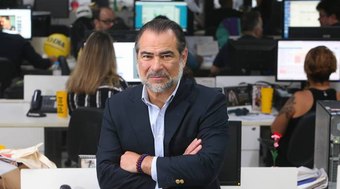
Luis Favre or Luiz Favre is the nom-de-guerre of Felipe Belisario Wermus (born 1949 Buenos Aires, Argentina). He was, as a young man, an Argentine union militant and member of Politica Obrera. Later he moved to France and became a leading member of the Internationalist Communist Organisation (OCI), a Trotskyist party in France, working especially in its international department. He moved to live in Brazil and is now a member of the PT.He is known to a broader public as the second husband of Marta Suplicy, ex-mayor of São Paulo and now a PT minister. Leia mais em Wikipedia.org http://en.wikipedia.org/wiki/Luis_Favre